
TL;DR
When comparing mobile app development companies in the UK, focus on fit — not just price.
-
- Choose architecture-first teams for scalable, long-term products.
- Prioritise iterative, agile teams for MVPs and startups.
- Look for integration expertise if dealing with legacy or enterprise systems.
- Emphasise strong UX capability for customer-facing apps.
The right partner is the one aligned with your technical complexity, growth plans, and long-term support needs.
Introduction
Choosing the right mobile app development company in the UK isn’t just about cost. The wrong partner can lead to delays, poor user experience, and expensive rebuilds.
In this guide, we’ve shortlisted the top mobile app development companies in the UK for 2026, based on real factors like scalability, UX capability, and delivery reliability.
Who This Guide Is For
This guide is designed for decision-makers evaluating mobile app development companies in the UK and looking for a reliable, long-term technology partner. It’s particularly useful for:
-
- Startup founders planning to build an MVP or launch their first mobile product
- CTOs and technical leads assessing architecture, scalability, and engineering depth
- Product managers comparing UK-based development partners for feature expansion
- Enterprise teams modernising legacy systems or integrating mobile apps with existing infrastructure
- Operations and digital transformation leaders seeking structured delivery and post-launch support
If you’re comparing vendors based on technical capability, scalability, and long-term reliability — not just price — this guide will help you make an informed decision.
Top Mobile App Development Companies Worth Considering in 2026
1. Emvigo – AI-Powered Mobile App Development Company with Agile Precision
-
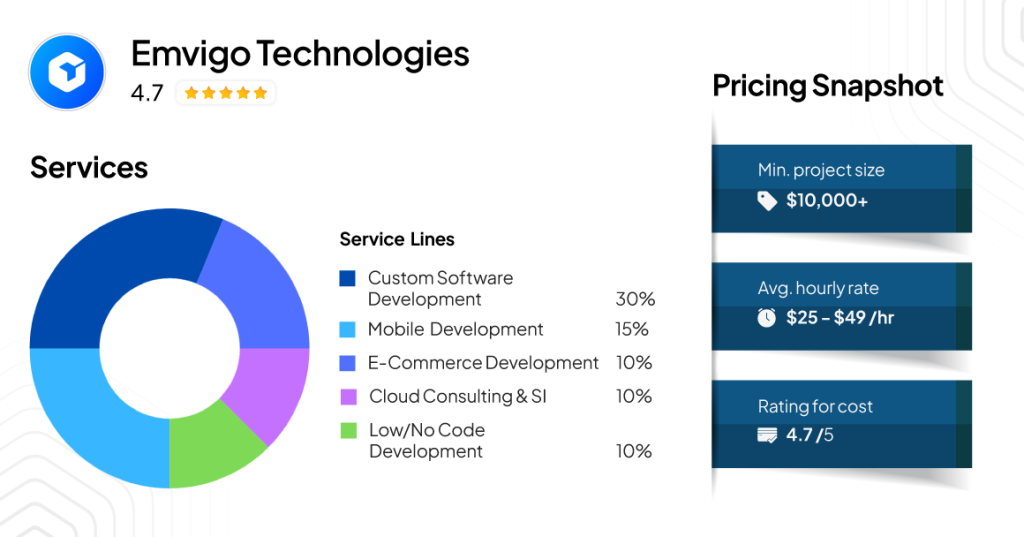
- Clutch Rating: 4.7/5
-
- Experience: 400+ apps delivered for startups and enterprises
-
- Strength: Clean, scalable architecture, reliable delivery, post-launch support
Emvigo is a UK-based mobile app development company that works with startups, scale-ups, and enterprise organisations to build scalable mobile applications. Their teams develop apps using Flutter, React Native, and native iOS/Android technologies, enabling efficient cross-platform performance and seamless backend integration.
A recent healthcare project highlights their impact, where a mobile app and e-commerce integration led to a 12% increase in overall revenue, a 44% rise in user registrations, and a 4x growth in product sales within a short period post-launch.
Emvigo’s development process focuses on structured sprint planning, consistent testing, and maintaining clean architecture to support long-term scalability. Emvigo also works on projects that require integrations with enterprise tools, data platforms, and modern cloud environments.
Why Emvigo stand out:
-
- Cross-platform and native mobile development expertise
- Structured sprint planning and predictable delivery
- Clean architecture designed for long-term scalability
Best for:
-
- Startups and scale-ups building MVPs that need to scale later
- Businesses needing cross-platform apps (Flutter, React Native)
- Projects requiring clean architecture and long-term support
- Teams that want structured delivery and predictable timelines
Not ideal for:
-
- Very small, quick one-off apps with tight budgets
- Projects where design aesthetics matter more than engineering depth
- Teams looking for a purely design-led agency
Want an app team that’s actually reachable and reliable? Get you free consultation for your app idea.
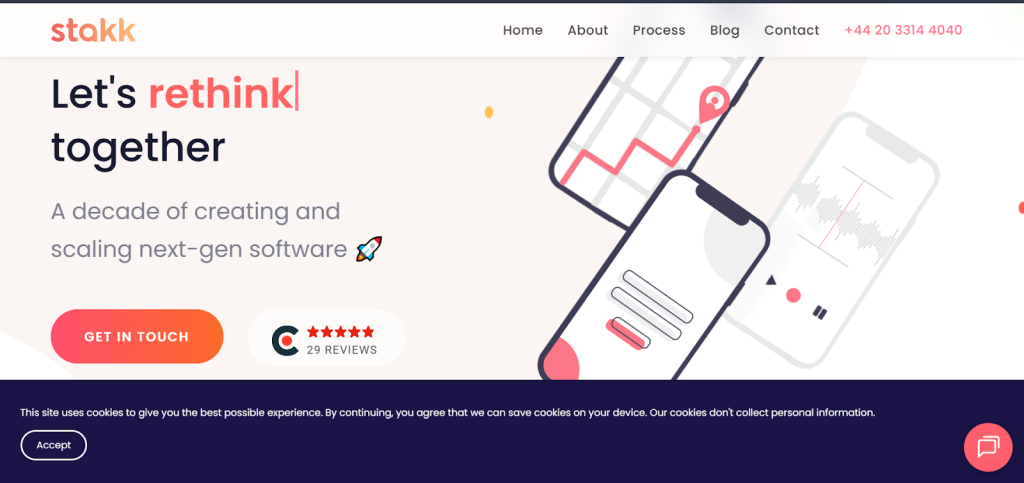
2. Stakk – the product-focused builders
-
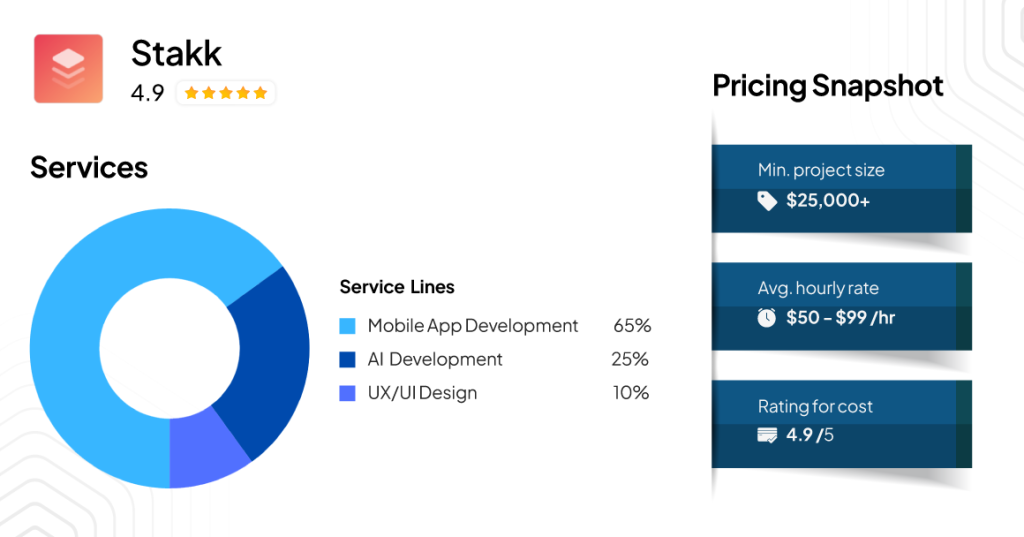
- Clutch rating: 4.9/5
-
- Notable project: Educational app with 4,000 monthly users, 4.8‑star rating, 20,000+ downloads in 9 months
Stakk has built a reputation for shipping polished consumer-facing mobile apps with a strong focus on UI consistency. While many Mobile App Development Companies emphasise speed, Stakk leans towards steady craftsmanship, which shows in their portfolio of lifestyle, wellness, and on-demand apps.
Their process revolves around building interfaces that reduce user friction — ideal for companies whose success depends on retention and repeated use. If your product roadmap includes progressive enhancement or multi-device continuity, Stakk fits well.
Why they stand out:
-
- Strong design-to-development handoff
- Good for apps that need visual consistency
- Practical approach to feature prioritisation
Best for:
-
- Consumer-facing apps where UI consistency is critical
- Lifestyle, wellness, and on-demand apps
- Products focused on user engagement and retention
- Teams that want a polished, product-focused build
Not ideal for:
-
- Backend-heavy or enterprise integration projects
- Complex data-driven apps with heavy infrastructure needs
- Projects requiring deep system architecture planning
3.The Distance – the legacy and complex project specialists
-
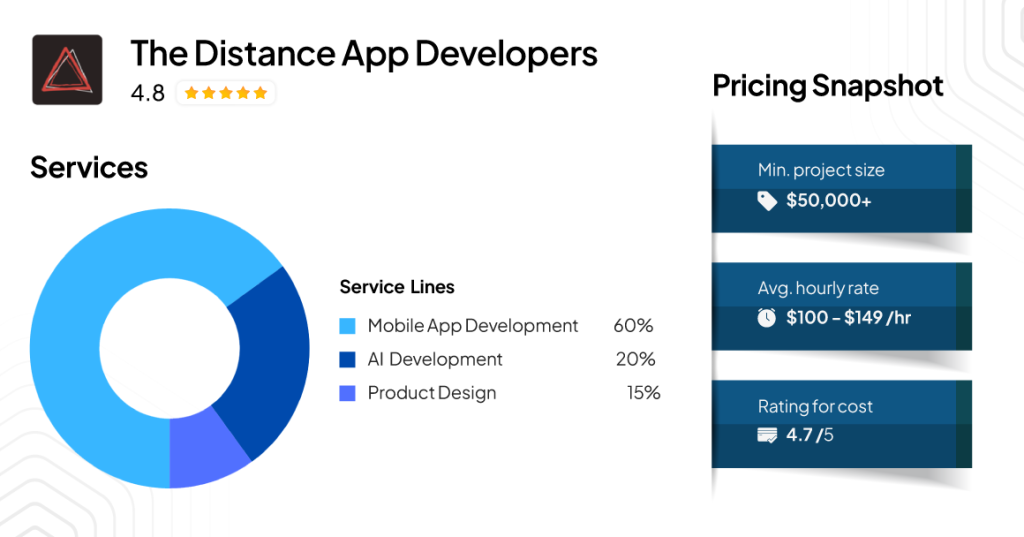
- Clutch rating: 4.8/5
-
- Strength: High-quality deliverables, excellent project management
-
- Impact: Enterprise apps achieving 40–50% increase in user engagement
The Distance is one of the better-known Mobile App Development Companies working with both enterprises and funded startups. What sets them apart is their ability to handle mature codebases — not just greenfield builds.
If your existing mobile app needs stabilisation, refactoring, or a full rebuild, The Distance is one of the few teams comfortable taking on “inherited” projects. Their technical audits are straightforward and avoid jargon, which helps stakeholders make decisions without confusion.
Good for:
-
- Businesses needing codebase clean-ups
- Apps with long-term maintenance requirements
- Teams looking for structured project governance
Best for:
-
- Businesses with existing apps that need rebuilding or stabilising
- Legacy system modernisation
- Enterprise-grade apps with complex requirements
- Teams needing structured project governance
Not ideal for:
-
- Fast MVP builds with tight deadlines
- Early-stage startups experimenting with ideas
- Lightweight apps with minimal backend complexity
For companies dealing with legacy systems or complex backend integrations, you may also relate to Emvigo’s blog on signs you should upgrade legacy software.
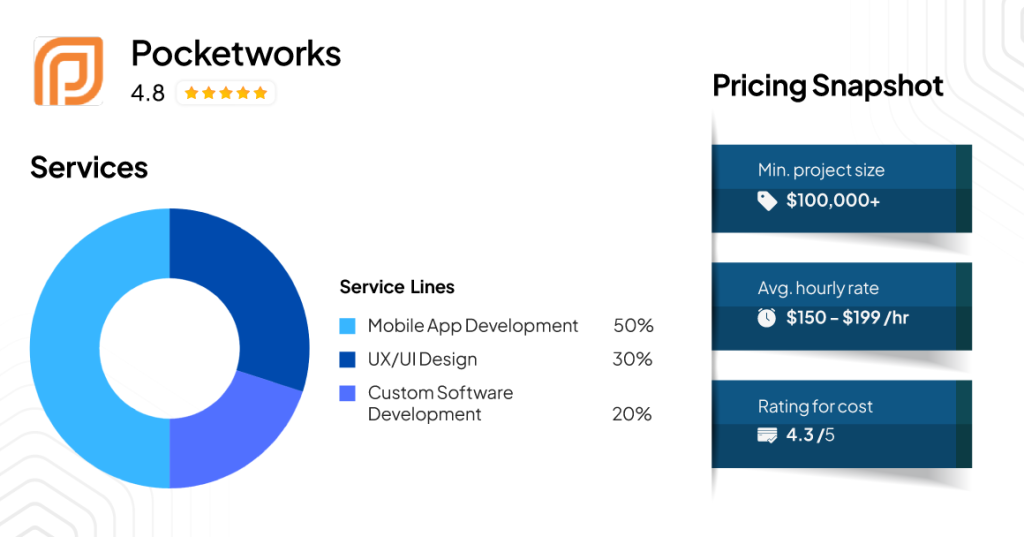
4. Pocketworks – the operational reliability experts
-
- Clutch Rating: 4.8/5
-
- Strength: Stable apps, strong UX, reliable post-launch support
-
- Impact: Millions of app installs/year, £250M+ in app-driven revenue
Pocketworks has a practical, real-world approach to mobile development that’s especially appealing to organisations looking for ongoing support rather than a “build-and-leave” relationship. Their strength lies in planning apps that keep working under high user load, especially for transport, health, and field operations.
What they do well:
-
- Long-term app support programmes
- Strong UX for everyday operational apps
- Emphasis on reliability over flashy features
Best for:
-
- Operational apps (transport, health, field services)
- Apps that require long-term maintenance and stability
- Businesses prioritising reliability over flashy features
- Systems that need to perform under heavy usage
Not ideal for:
-
- Highly design-driven or visually experimental apps
- Rapid MVPs with frequent iteration cycles
- Cutting-edge, innovation-heavy product builds
If your app requires strong uptime or must integrate with internal systems, Pocketworks is a dependable choice.
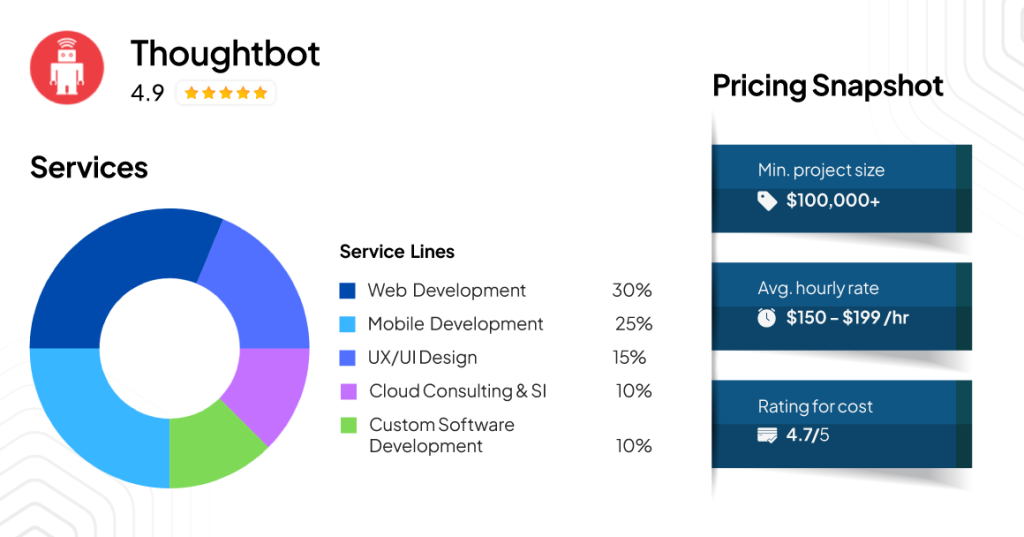
5. Thoughtbot – the iterative MVP specialists
-
- Clutch rating: 4.9/5
- Strength: Agile delivery, strong UX & engineering, collaborative
- Clients: Harvard Business Review, IESO Digital Health
Thoughtbot is known internationally, but their London team has quietly built a strong niche working on mobile apps that need rapid iteration and disciplined product shaping. Unlike many Mobile App Development Companies, they don’t just write code — they actively help teams define what’s genuinely worth building.
Their engineering is lean, structured, and ideal for businesses that want to experiment but still keep technical debt under control. Thoughtbot is also a good fit for founders who need hands-on guidance through early product stages.
Highlights:
-
- Strong Ruby, React, and cross-platform mobile expertise
- Good for MVPs that need clarity and speed
- Structured development rhythms
Best for:
-
- Startups building MVPs and validating product ideas
- Teams that need strong product thinking and guidance
- Iterative development with fast feedback loops
- Businesses wanting clean, maintainable code from day one
Not ideal for:
-
- Large enterprise systems with heavy backend integrations
- Projects requiring long-term support at scale
- Teams that already have a fully defined product and just need execution
6. Silverchip – the enterprise integration partners
-
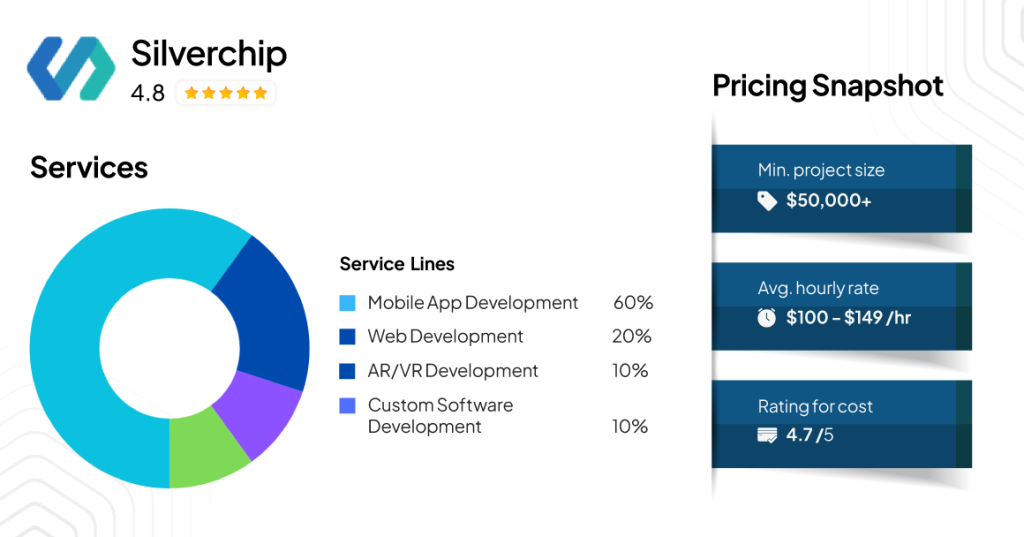
- Clutch Rating: 4.8/5
-
- Awards: Best Medium Digital Agency, Tech for Good
-
- Strength: Enterprise apps, API integrations, digital transformation
Silverchip (now within CTI Digital) brings solid engineering discipline to mobile app builds — especially apps that involve analytics, payments, or backend-heavy workloads. Their Manchester roots show in their approach: straightforward communication and emphasis on technical reliability.
With CTI Digital’s wider ecosystem behind them, they can also support businesses that need mobile development combined with transformation, UX research, or broader digital programmes.
They’re known for:
-
- Backend-heavy app development
- Apps needing strong API architecture
- Integration with enterprise systems
Best for:
-
- Enterprise applications with complex backend systems
- Apps requiring API integrations, analytics, or payments
- Digital transformation projects
- Businesses needing structured, large-scale delivery
Not ideal for:
-
- Simple MVPs or early-stage startup apps
- Projects with tight budgets
- Apps that prioritise speed over robustness
For teams handling complex infrastructure or cloud deployments, the Emvigo blog on cloud-native architecture might be a useful read.
7. CreateFuture – the design-driven innovators
-
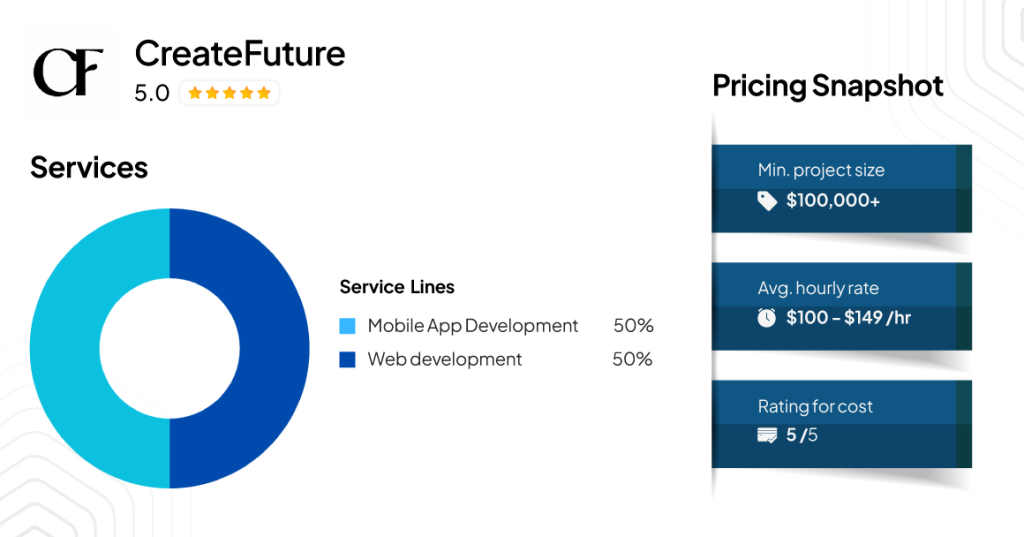
- Clutch Rating: 5/5
-
- Focus: Premium UX/UI, intuitive interface, visually polished apps
-
- Best for: Consumer-facing apps prioritising design and engagement
CreateFuture brings design maturity and front-end finesse to mobile app development. While they’re often recognised for brand and product design, their mobile engineering capabilities are well-respected among companies that prioritise user experience.
Their work suits businesses launching customer-facing apps where layout clarity, content flow, and micro-interactions matter. If your users expect polished screens and smooth transitions, CreateFuture is a strong contender.
Strengths:
-
- Premium design quality
- Clean user journeys
- Good communication and iterative delivery
Best for:
-
- Design-led, customer-facing mobile apps
- Products where UX/UI is a key differentiator
- Brands focusing on premium user experience
- Apps requiring polished interfaces and smooth interactions
Not ideal for:
-
- Backend-heavy or infrastructure-driven apps
- Projects requiring deep engineering complexity
- Systems that prioritise scalability over design
Comparison Table of the Leading UK Mobile App Development Companies
| Criteria |
Emvigo
|
Stakk | The Distance | Pocketworks | Thoughtbot | Silverchip | CreateFuture |
|---|---|---|---|---|---|---|---|
| Clutch Rating | ⭐ 4.7/5 | ⭐4.9/5 | ⭐4.8/5 | ⭐4.8/5 | ⭐4.9/5 | ⭐4.8/5 | ⭐5/5 |
| Engineering Depth | Architecture-first Cross-platform + native |
Solid frontend & backend | Legacy & complex systems | Reliable backend apps | Structured MVP builds | Enterprise integrations | UX-driven development |
| Delivery Reliability | Predictable & transparent | Consistent | Strong for complex apps | Dependable | Fast iterations | Enterprise-focused | Design-led delivery |
| UX & Product Thinking | Business-focused UX Strategy-driven |
Consistent UI | Moderate UX | Simple interfaces | Strong MVP UX | Enterprise UX | Polished design |
| Scalability | Built-in from start | Moderate | Enterprise-ready | Mid-scale focus | MVP scaling | Large-scale systems | Limited backend scaling |
| Support & Maintenance | Long-term structured | Standard | Ongoing maintenance | Consistent support | Limited post-launch | Enterprise support | Design-focused |
| Speed of Updates | Fast & efficient | Moderate | Slower (legacy) | Reasonable | Fast MVP cycles | Moderate | Moderate |
| Business Understanding | High — business aligned | Moderate | Project-focused | Operational | Moderate | Enterprise context | User-focused |
How Much Does Mobile App Development Cost in the UK?
The cost of working with mobile app development companies in the UK varies based on complexity, features, and integrations. Here’s a realistic breakdown:
1. Simple Apps (£15,000 – £25,000)
Best for MVPs or basic apps with limited features.
Typically includes:
-
- Basic UI/UX design
- Core features (login, dashboard, simple workflows)
- Minimal backend or third-party integrations
2. Mid-Level Apps (£30,000 – £70,000)
Suitable for growing businesses needing more functionality.
Typically includes:
-
- Custom UI/UX design
- API integrations (payments, CRM, analytics)
- Admin panels and dashboards
- Cross-platform development (Flutter or React Native)
3. Complex / Enterprise Apps (£100,000+)
Designed for large-scale platforms and advanced use cases.
Typically includes:
-
- Advanced architecture and scalability planning
- Multiple integrations (ERP, cloud systems, data platforms)
- High-level security and compliance features
- Real-time features, automation, or AI capabilities
What Drives Mobile App Development Costs Up?
Several factors can significantly impact pricing:
-
- Feature complexity (real-time updates, AI, custom workflows)
- Number of integrations (payment systems, APIs, enterprise tools)
- Design requirements (custom UI vs standard components)
- Platform choice (native vs cross-platform)
- Post-launch support and maintenance
The right investment depends on your long-term goals. A lower upfront cost may limit scalability, while a well-architected solution can reduce future redevelopment and maintenance costs.
FAQs on Mobile App Development
What factors should I consider when choosing a mobile app development company?
When choosing a mobile app development company, focus on their technical expertise, portfolio, and experience with similar projects. Strong UX/UI design capabilities and clear communication are also important for a smooth development process. Look for a team that can build scalable solutions and provide long-term support. Most importantly, the company should understand your business goals and align the technology strategy with your growth plans.
How much does it typically cost to develop a mobile app in the UK?
The cost of developing a mobile app in the UK depends on the complexity, features, and technology used. Simple apps usually cost between £15,000 and £25,000. Mid-level apps with integrations may range from £30,000 to £70,000, while complex enterprise applications can exceed £100,000. Always confirm whether testing, maintenance, and post-launch updates are included in the quoted price.
What is the difference between native and cross-platform development?
Native development involves building apps specifically for a single platform, such as iOS or Android, using platform-specific programming languages. This approach typically delivers the best performance and deeper device integration. Cross-platform development uses frameworks like Flutter or React Native to build one codebase that works on multiple platforms. This method can reduce development time and cost while maintaining a consistent user experience.
How long does it take to develop a mobile app?
The time required to build a mobile app varies depending on the complexity and number of features. A basic app or MVP can take around 2 to 4 months to develop. More complex apps with advanced features, integrations, and custom workflows may take 6 to 12 months or longer. Proper planning, testing, and design iterations also play a major role in determining the overall timeline.
What makes Emvigo different from other mobile app development companies in the UK?
Emvigo combines a UK-facing delivery approach with a globally distributed engineering team, helping businesses balance cost efficiency with structured project management. Their sprint-based process ensures clear timelines, regular updates, and predictable delivery. With expertise in cross-platform and native development, Emvigo is a practical choice for teams looking for scalable solutions without the higher costs of fully UK-based development.
Do mobile app development companies offer post-launch support?
Yes, most professional mobile app development companies provide post-launch support. This can include bug fixes, performance monitoring, security updates, and compatibility improvements when operating systems change. Many companies also offer ongoing feature enhancements and optimisation services. It’s important to confirm the scope of support, response times, and maintenance plans before starting the development project.
Can a UK-based mobile app development company work with international clients?
Yes, many UK-based mobile app development companies regularly work with international clients. They use modern collaboration tools, agile development methods, and remote communication platforms to manage projects effectively. Teams often adjust to different time zones and work styles to ensure smooth collaboration. This makes it easy for businesses worldwide to partner with UK development companies for their mobile app projects.
Final Thoughts on Choosing a Mobile App Partner in the UK
The UK has plenty of capable mobile app development companies, each with their own strengths and ways of working. Whether you’re after a quick MVP, a cross-platform build that saves time, or an app that needs to handle growth without issues, there’s a good match out there for most projects. What matters most is finding a team that listens to what you actually need, communicates clearly, and delivers something reliable that you can build on later.
From the ones we’ve looked at, it’s clear the scene is healthy – firms are keeping up with practical tools like Flutter and React Native, and they’re focused on making apps that users stick with.