

If you’ve ever wondered what’s the difference between Deloitte and Gartner or which one suits your business best, this guide breaks it all down simply.
When you’re looking for a partner to support your business strategy, you may come across two very different but highly reputable firms: Deloitte and Gartner. While on the surface they both serve enterprise clients with advisory and consulting services, the nature of what they offer and how they engage can be markedly different. This comparison matters because selecting the right vendor can influence project cost, speed of delivery, business fit and long-term value.
We’ll walk through Gartner vs Deloitte across key areas—from their histories and service offerings to pricing models, tech stack, strengths and weaknesses. Then we’ll explain why Emvigo may be the better choice for startups and mid-sized businesses who need flexibility, innovation and cost-effectiveness. Whether you’re a business owner, product leader or tech executive, by the end you’ll have a clear view of who does what — and which partner may align best with your needs.
Deloitte vs Gartner: Company Overview
Deloitte
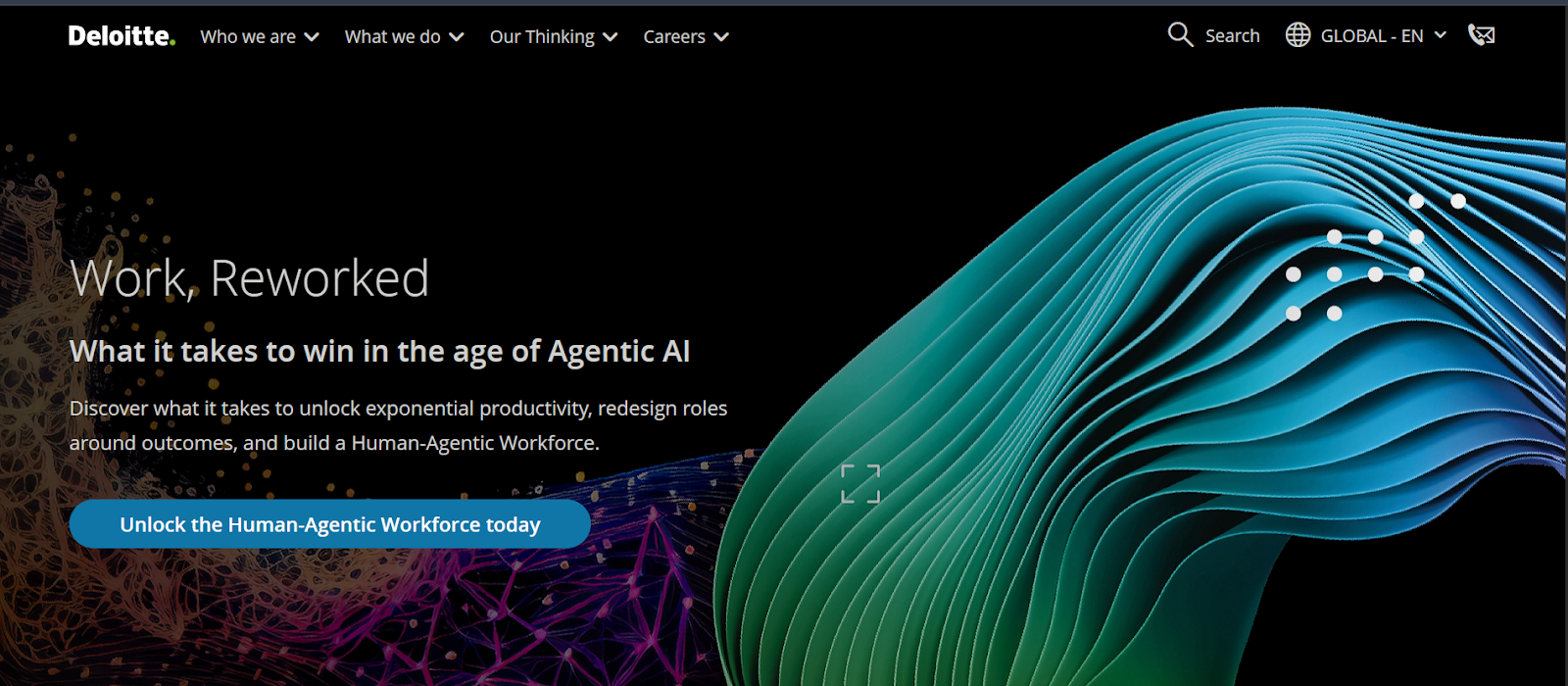
Deloitte was founded in 1845 in London by William Welch Deloitte, initially focused on audit and accounting services. Over the decades, Deloitte has grown into one of the world’s largest and most respected professional services firms .
Deloitte is headquartered in London, United Kingdom, and operates in over 150 countries with more than 700 offices worldwide). The firm employs approximately 460,000 people globally as of 2024, serving a diverse client base that includes Fortune 500 companies, government agencies, and major non-profits.
Deloitte’s expertise spans professional services such as audit, tax, and legal, as well as management consulting, technology transformation, cybersecurity, risk advisory, and business strategy, making it a one-stop partner for organisations looking to modernise operations, adopt new technologies, or navigate complex regulatory environments. Its combination of global scale, deep industry knowledge, and innovative solutions has positioned Deloitte as a trusted advisor for enterprises seeking both strategic insight and hands-on implementation.
Gartner
Gartner was founded in 1979 in Stamford, Connecticut, USA, by Gideon Gartner, with the goal of providing independent technology research and insights to help businesses make smarter decisions.
Gartner is headquartered in Stamford, Connecticut, and has a global presence spanning approximately 90 countries with over 21,000 employees . Gartner primarily serves CIOs, senior executives, government agencies, and enterprise clients, offering a wide range of services, including technology research, market analysis, advisory consulting, benchmarking, and strategic guidance.
Its most well-known offerings include the Magic Quadrant, Hype Cycle, and various peer insights reports, which help businesses evaluate technology vendors, understand emerging trends, and make informed decisions. By combining deep industry expertise with data-driven research, Gartner has become a trusted authority for organisations seeking independent, actionable insights that guide their IT and business strategies on a global scale.
Services / Offerings Comparison
Here’s a table to clearly show how Deloitte vs Gartner compare in their service offerings:
Pricing & Engagement Models
For “Deloitte vs Gartner”, one big difference is how they engage and how you pay.
Deloitte
When it comes to engagement and pricing, Deloitte operates primarily on a project-based or retainer model, often involving long-term managed services. This means that clients typically engage a dedicated team of consultants, analysts, and technical experts for several months or even years, depending on the scale of the transformation programme. These engagements can range from implementing a new enterprise system to complete digital transformation initiatives across multiple departments or regions.
As Deloitte customises its services to the specific needs and complexity of each client, pricing is generally bespoke and not publicly disclosed, making it less predictable for smaller organisations or startups. While this customised approach can result in higher upfront costs, the trade-off is a comprehensive suite of services that covers everything from strategic planning and process optimisation to technical implementation and ongoing support.
For companies that require end-to-end transformation and global-scale delivery, Deloitte’s engagement model offers significant value, though it may be considered premium compared to smaller, more flexible providers.
Gartner
Gartner follows a different approach when it comes to pricing and engagement. Rather than large-scale project teams, Gartner primarily operates through subscription-based access to research, advisory hours, and consulting engagements.
Organisations typically subscribe to Gartner’s research services annually, gaining access to industry reports, Magic Quadrants, Hype Cycles, and expert analyst consultations, which provide actionable insights for IT strategy, vendor selection, and technology adoption. Some clients also engage Gartner for short-term advisory projects or workshops, but the focus is more on providing data-driven guidance and recommendations rather than full-scale implementation.
Pricing for Gartner’s subscriptions is generally more transparent than Deloitte, though it can vary significantly depending on the level of access and services chosen, ranging from tens of thousands to hundreds of thousands of pounds annually. While Gartner’s model is ideal for organisations seeking strategic insight, benchmarking, and decision support, it offers less value for companies looking for hands-on execution or customised technology deployment.
Expertise & Technology Stack
When it comes to expertise and technology capabilities, Deloitte and Gartner take very different approaches. Deloitte excels in hands-on implementation and large-scale technology transformation, working across multiple platforms such as SAP, Oracle, Salesforce, AWS, Microsoft Azure, and Google Cloud. Its teams combine software development, data analytics, AI, and cloud expertise to deliver end-to-end solutions, from strategic planning to deployment and optimisation. Deloitte also invests heavily in research, innovation labs, and emerging technologies, including generative AI, automation, and cybersecurity solutions, ensuring clients benefit from cutting-edge tools and methodologies.
Gartner, on the other hand, focuses on advisory and research expertise rather than direct implementation. Its strength lies in providing independent, data-driven guidance on technology selection, vendor performance, and IT strategy. Gartner analysts evaluate emerging technologies, track market trends, and produce frameworks such as the Magic Quadrant and Hype Cycle, which help organisations make informed decisions. While Gartner has partnerships with major technology vendors, its role is to inform and guide rather than execute, making it an ideal choice for businesses that need insight and strategic clarity without hands-on delivery.
Key takeaway: Deloitte builds the future; Gartner predicts it. For companies that need both strategy and execution, a flexible partner like Emvigo can combine the strengths of both worlds.
Strengths & Weaknesses of Deloitte and Gartner
When comparing Deloitte and Gartner, it’s important to understand that both firms are highly respected but serve different purposes. Knowing their strengths and limitations can help businesses select a partner that fits their needs.
Deloitte
Strengths:
-
- End-to-End Delivery – Deloitte can manage entire projects from strategy to implementation, covering consulting, digital transformation, technology deployment, and operations. This makes it ideal for large-scale initiatives.
- Global Presence & Scale – Operating in over 150 countries with more than 460,000 employees, Deloitte has the resources to handle complex, multi-region projects.
- Industry Expertise – Deep experience across industries including finance, healthcare, energy, telecom, and government allows Deloitte to deliver highly customised solutions.
- Innovation & Technology – Heavy investment in AI, cloud, automation, and cybersecurity ensures access to cutting-edge tools and methodologies.
- Credibility & Reputation – Deloitte is consistently ranked as a top consulting firm globally, which adds trust and assurance for enterprise clients.
Weaknesses:
-
- High Cost – Due to scale and global footprint, Deloitte’s services come at a premium, often making it unaffordable for startups or small to mid-sized businesses.
- Complex Engagements – Large-scale projects may involve multiple teams and layers of approval, which can slow decision-making or responsiveness.
- Less Flexibility for SMEs – The firm’s structure is better suited for enterprise clients; smaller businesses may struggle to get tailored, nimble solutions.
Gartner
Strengths:
-
- Expert Research & Advisory – Gartner is a leading authority for IT, technology strategy, and market research, helping companies make informed decisions.
- Independent Insights – Its analysis, including the Magic Quadrant and Hype Cycle, is widely respected for impartiality and credibility.
- Strategic Guidance – Excellent at helping organisations plan technology investments, select vendors, and assess future trends.
- Global Recognition – Gartner’s reports and insights are referenced by thousands of enterprises worldwide, giving decision-makers confidence in their recommendations.
Weaknesses:
-
- Limited Hands-On Implementation – Gartner focuses on advice rather than execution, so clients must find a separate partner to implement strategies.
- Cost for Smaller Businesses – Annual subscriptions for research and advisory can range from tens to hundreds of thousands of pounds, which may be prohibitive for startups and SMEs.
- Generic Recommendations for Small Clients – While research is high-quality, it’s often geared toward large enterprises, meaning smaller organisations may not get fully customised guidance.
- No End-to-End Delivery – Gartner is not designed for building systems, deploying solutions, or running operational projects, limiting its practical impact for execution-focused businesses.
What Sets Each Apart: Deloitte vs Gartner
When comparing Deloitte and Gartner, the distinction goes beyond size or revenue — it’s about how each firm creates value for its clients. Understanding these differentiators helps businesses decide which partner aligns with their specific needs, or whether a more flexible alternative like Emvigo might be the better fit.
Deloitte
Deloitte’s unique strength lies in its full-service, end-to-end approach. From strategic advisory to hands-on implementation, Deloitte is capable of managing large-scale transformations across multiple regions and industries.
-
- Execution at Scale: Deloitte doesn’t just advise — it builds, deploys, and manages complex systems for clients. Whether it’s implementing enterprise software, integrating cloud platforms, or rolling out AI-driven solutions, Deloitte provides comprehensive support.
- Global Reach & Industry Depth: With a presence in over 150 countries and deep expertise across finance, healthcare, energy, retail, and government sectors, Deloitte can tackle multi-industry and cross-border challenges.
- Innovation-Focused: The firm heavily invests in emerging technologies like generative AI, automation, and cybersecurity, ensuring clients have access to state-of-the-art tools.
Essentially, Deloitte is ideal for large enterprises needing a partner that can plan, execute, and manage every aspect of a transformation programme.
Limitations: Despite these strengths, Deloitte’s size and scale can make it less agile for smaller businesses, and its services come at a premium cost.
Gartner
Gartner, in contrast, is a research-driven advisory firm that excels at providing data-backed insights and strategic guidance. Its value lies not in building systems but in helping clients make informed decisions about technology, vendors, and market trends.
- Authoritative Research & Frameworks: Gartner’s Magic Quadrant, Hype Cycle, and Peer Insights are globally recognised tools that guide organisations in evaluating technology providers and planning IT strategy.
- Independent Advisory: Gartner’s recommendations are widely trusted for impartiality, helping businesses reduce risk when choosing technology vendors.
- Strategic Planning Focus: Companies turn to Gartner for insights into emerging trends, industry benchmarks, and decision-making frameworks.
Simply put, Gartner is perfect for enterprises looking to make strategic technology decisions with confidence but who may not need direct implementation support.
Limitations: Gartner does not provide hands-on implementation or customised development, and its services can be costly for smaller companies that may not fully leverage research subscriptions.
Why Emvigo is the Smart Choice for Your Business
When comparing Deloitte vs Gartner, it’s clear that both firms excel in their respective domains — Deloitte in large-scale transformation and Gartner in strategic advisory. However, for startups, small and mid-sized businesses (SMEs), and fast-growing companies, both options may present challenges: high costs, complex processes, and limited flexibility. This is where Emvigo stands out as a modern, agile alternative.
1. Custom Solutions for Every Business Size
Unlike Deloitte, which is optimised for enterprise-scale clients, or Gartner, which is primarily research-driven, Emvigo focuses on flexibility and scalability. Whether you’re a startup looking to quickly launch an MVP or an SME aiming to modernise your digital infrastructure, Emvigo offers customised solutions that fit your size, budget, and growth stage.
2. Strategy Meets Execution
Many businesses struggle when advisory insights do not translate into actionable solutions. Emvigo bridges this gap by offering both strategic guidance and hands-on implementation. From AI-driven solutions, cloud integration, and automation to custom software development and business intelligence dashboards, Emvigo ensures that recommendations lead to measurable results.
3. Cost-Effective and Transparent Engagement Models
Emvigo provides flexible pricing and engagement options, whether it’s project-based, subscription, or dedicated teams. This transparency and scalability make it a high-value partner for businesses seeking impactful results without enterprise-level budgets.
4. Innovation at the Core
Emvigo thrives on technology-driven innovation. With expertise in AI, machine learning, cloud computing, and automation, Emvigo helps businesses stay ahead of the curve without the overhead of large consulting firms. The emphasis is on building practical, future-ready solutions that can evolve with your business.
5. Startup & SME Friendly
Emvigo’s approach is highly suited for dynamic, growing companies. While Deloitte may be too large and Gartner too research-focused for smaller organisations, Emvigo offers agility, personal attention, and rapid execution, ensuring that your business goals are achieved quickly and efficiently.
If you’re looking for a partner who delivers strategy, innovation, and execution — all while being cost-effective and flexible, Emvigo is a clear choice. It’s not just about advisory or implementation alone — it’s about creating tangible results that grow with your business. Connect with Emvigo today and get started.
Summary Table: Deloitte vs Gartner vs Emvigo
FAQs: Gartner vs Deloitte
What is the difference between Deloitte and Gartner?
Deloitte is a global consulting and professional services firm that offers end-to-end solutions, including strategy, technology implementation, and digital transformation. Gartner, on the other hand, is a research and advisory firm that provides market insights, technology evaluation, and strategic guidance but does not typically implement solutions.
Which is better: Deloitte or Gartner?
It depends on your business needs. If you require hands-on implementation and large-scale transformation, Deloitte is ideal. If you want research-backed insights and technology guidance, Gartner is better suited. For startups and SMEs seeking both strategy and execution with flexibility, Emvigo can be a more cost-effective option.
What industries do Deloitte and Gartner serve?
Deloitte works across finance, healthcare, energy, retail, government, and more, providing broad professional services. Gartner primarily serves IT, technology, finance, manufacturing, and government organisations, focusing on technology strategy and advisory.
How much do Deloitte and Gartner charge?
Deloitte’s fees are project-based and bespoke, often high due to large-scale delivery. Gartner usually offers subscription-based research and advisory services, ranging from tens of thousands to hundreds of thousands of pounds annually, depending on access and services. Emvigo provides flexible, transparent pricing suitable for startups and SMEs.
Can Gartner implement solutions like Deloitte?
No, Gartner focuses on advisory and research. It provides insights, frameworks, and recommendations, but does not typically deliver hands-on implementation. Deloitte and Emvigo, however, offer full-scale execution.
Why should I choose Emvigo over Deloitte or Gartner?
Emvigo combines strategy, execution, and innovation at a cost-effective price point. It is agile, startup- and SME-friendly, offers customised AI, cloud, and software solutions, and ensures measurable business impact without the enterprise-level overhead of larger firms.
How quickly can Emvigo start working with a business?
Emvigo’s agile teams can onboard rapidly, often delivering initial solutions in weeks, making it suitable for businesses that need fast, flexible, and actionable results.
Does Emvigo cater to specific industries?
Emvigo works with startups and SMEs across multiple industries, including finance, retail, healthcare, and technology. Its solutions are customised to the client’s domain, business size, and goals.
Are Deloitte, Gartner, or Emvigo better for small businesses?
Large enterprises often benefit from Deloitte or Gartner, but startups and SMEs may find Emvigo a better fit due to flexibility, personalised service, and cost-effectiveness.
Finding the Right Partner for Your Business Growth
Choosing the right IT and consulting partner is about more than just reputation — it’s about finding a team that can deliver strategy, execution, and measurable results while fitting your business size, budget, and growth ambitions.
Deloitte and Gartner each bring undeniable strengths: Deloitte with its global-scale implementation capabilities, and Gartner with its authoritative research and strategic guidance.
However, for startups and SMEs looking for a partner that combines flexibility, innovation, and actionable delivery, Emvigo offers a compelling alternative. By providing customised AI, cloud, and software solutions, transparent pricing, and agile execution, Emvigo ensures businesses can scale faster, innovate smarter, and see tangible ROI without the overhead of large consulting firms.
Whether you’re seeking guidance, hands-on implementation, or both, partnering with Emvigo means getting solutions that evolve with your business and help you stay ahead in a competitive landscape. Get in touch with Emvigo today and find how we can drive growth and innovation for your business.