
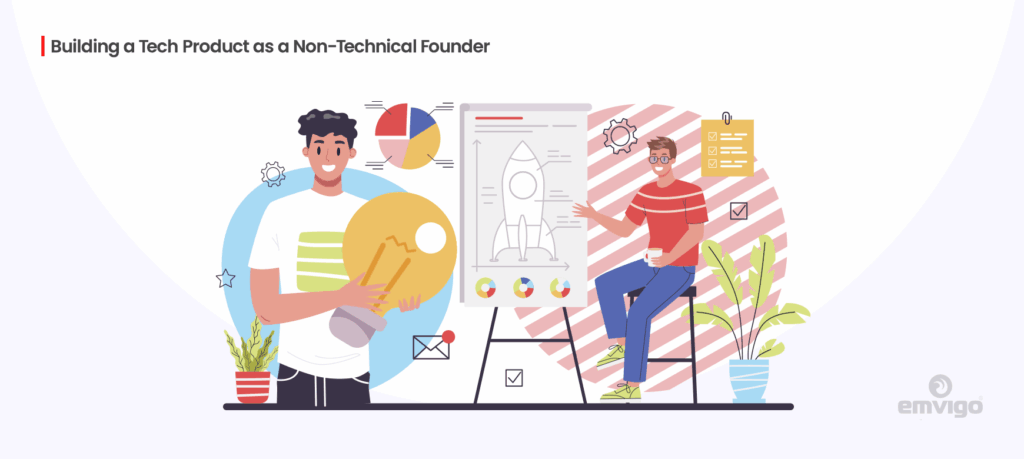
Building a tech product without knowing how to code might seem scary—but it’s more common than you think. Many of today’s top tech companies were started by people with no technical background. For example, Brian Chesky and Joe Gebbia, the founders of Airbnb, were designers, not developers. Whitney Wolfe Herd, who created Bumble, focused on marketing and branding. Even Richard Branson, known for launching tech-related businesses like Virgin Mobile, never learned to code. What they all had was a strong idea, a clear understanding of what users needed, and the right people to help build it.
You don’t need to code to create a great product—you need a smart plan, a clear goal, and the ability to explain your vision. Thanks to tools like low-code platforms and support from experienced software teams like Emvigo Technologies, it’s easier than ever to launch a tech product as a non-technical founder. Your strengths might be in problem-solving, business strategy, or customer experience—and those skills are just as important as writing code.
In this guide, we’ll show you how to turn your idea into a real product. You’ll learn how to test your idea, build a simple version first (called an MVP), work with developers, avoid common mistakes, and choose the right partners. If you’re starting a new project or planning to build something in 2025, this guide will help you move forward with clarity and confidence.
Why Non-Technical Founders Still Win in Tech
You don’t need to write code to build a valuable tech product. Some of the world’s most successful startups were launched by founders with no formal tech background. Why? Because vision, user empathy, and execution strategy often outweigh raw coding skills.
What Non-Technical Founders Bring to the Table:
-
- Deep understanding of customer pain points
- Business acumen and market insight
- Strong focus on product-market fit
- Leadership and storytelling
As long as you surround yourself with the right talent, you can turn your vision into a scalable, reliable product.
Step-by-Step: Turning Your Idea into a Tech Product
1. Validate the Problem and the Market
Before you hire a developer or start building anything, make sure you’re solving a real problem. Talk to potential users, run quick surveys, and ask questions to understand their pain points. You can also use free tools like Google Trends or Statista to check if there’s real demand for your idea. Validating your idea early saves time, money, and a lot of frustration later.
Check out Emvigo’s blog on Common Challenges in Digital Transformation to learn how to tackle strategic barriers from day one.
2. Define a Clear Scope for Your MVP
Start small. Focus on building a Minimum Viable Product (MVP)—a version of your product that solves one core problem well. This helps you test your idea quickly, get real feedback from users, and improve your product before spending more time or money.
Ask:
-
- What’s the single most valuable feature?
- Can I launch in 4–6 weeks?
- What user feedback do I need first?
See MVP in 4 Weeks for an example of how non-technical founders can go from idea to launch, fast.
3. Choose the Right Development Partner
You have three primary options:
-
- Hire a freelancer
- Build an in-house team
- Partner with a software agency
For non-technical founders, agencies are often the safest and most efficient route. They offer complete teams with project managers, developers, designers, and testers.
Check Emvigo’s guide on Staff Augmentation vs Agency Hiring to make the best choice for your situation.
What to Look for in a Technical Partner
Look for development teams that offer:
-
- Proven experience building similar products
- Transparent communication channels
- Agile processes and milestone tracking
- Post-launch support and scaling plans
Tools and Technologies That Make Things Easier
Understanding the tools your team uses will help you stay engaged and confident during the build process:
If you’re considering a low-code approach, read Top Low-Code Platforms for practical options.
How to Communicate Effectively with Developers
Even if you’re not technical, you can lead a development project by being a clear communicator and decision-maker.
Tips for Better Collaboration:
-
- Focus on “what” and “why”, not “how”
- Use visuals like wireframes or flowcharts
- Set expectations using short user stories (e.g., “As a user, I want to book an appointment”)
- Ask the team to show what they’ve built after each phase
- Keep feedback timely, specific, and actionable
Building rapport with your dev team is critical—so don’t be afraid to ask questions. You bring the “why,” they bring the “how.”
Budget and Cost Considerations
Development costs vary widely depending on complexity, timeline, and location. Focus on value creation rather than just cost-cutting.
Prioritise:
-
- MVP build
- Quality assurance
- UX/UI design
- Analytics and iteration
See How Much Should an MVP Cost in 2025? for realistic pricing insights designed for UK startups
Common Pitfalls to Avoid
Avoid these common traps non-technical founders fall into:
-
- Overbuilding: Adding features users haven’t asked for
- Micromanaging: Trust your devs to deliver
- Lack of iteration: Don’t wait until launch to test
Learn more from Common Pitfalls in Software Development Projects.
Why Partner with Emvigo Technologies?
At Emvigo Technologies, we’ve supported dozens of non-technical founders across the UK in turning their ideas into successful digital products. From building a simple MVP to launching a full-scale solution, our team handles the entire journey—offering end-to-end software services that match your vision, budget, and timeline.
Here’s how we support non-technical founders:
-
- Discovery Workshops to refine your product idea and scope
- Low-code and agile MVP development for faster time-to-market
- Ongoing UX/UI optimisation and feedback loops
- Transparent communication with dedicated project managers
- Post-launch support, scaling, and maintenance
We’ve guided businesses just like yours through complex software journeys—whether it’s helping launch an MVP in just 4 weeks, or avoiding common outsourcing pitfalls.
Whether you’re building a B2B SaaS tool, a mobile app, or a consumer marketplace—we’ll help you build it smarter, not harder.
Book a free consultation to discuss your product idea today.
FAQs
Can I build a product without knowing how to code?
Yes. You’ll need a clear vision, a reliable technical partner, and strong communication. Many successful founders are non-technical.
What’s the best way to hire developers as a non-tech founder?
Work with trusted agencies or reliable hiring platforms. Agencies are a great choice if you want full support—from design to launch—especially when you don’t have the technical know-how to manage everything yourself.
How much does it cost to build a tech product in 2025?
It varies. MVPs can range from £8,000–£30,000 depending on complexity. See Emvigo’s MVP pricing breakdown for detailed insights.
Final Thought
You don’t need to write code—you need to build confidence, clarity, and a great support network. With strategic validation, the right development partner, and a clear MVP path, your tech vision can become a thriving product.