
Stop Right There: Are You About to Bet Your Company’s Future on the Wrong Tech Giant?
Let’s be real for a second. Choosing a technology partner? That’s not a routine hire. It’s the biggest decision you’ll make all year. You’re essentially choosing the architect of your next decade.
And you’re facing a tough choice. In one corner, you have IBM. The legacy titan. They bring the serious firepower: think Watson AI and enterprise-level security. In the other corner? It’s Infosys. The agile contender. They promise digital transformation that’s quicker and often kinder to your budget.
But here’s the million-dollar question: Which one is actually right for your business?
One is premium. The other is flexible. One is an AI powerhouse. The other is a master of automation. It feels like a massive gamble, right?
Before you sign anything, you need to know the hidden truth about both of them. We’re going beyond the marketing hype today. That’s where understanding their core services, revenue focus, and industry strengths becomes crucial. At Emvigo, we’ve worked alongside clients who’ve partnered with both IBM and Infosys — helping them evaluate, integrate, and maximize outcomes.
This article breaks down the two tech giants through a practical lens — helping you choose a partner that aligns not just with your tech stack, but your vision for growth.
Ready to find out which tech giant deserves your investment? Let’s unlock the secrets to a winning partnership, right now.
Overview of IBM and Infosys
IBM: A Legacy of Innovation
IBM is a global technology powerhouse with a rich legacy of innovation. Founded in 1911, it has evolved from a hardware company to a leader in cloud computing, AI, and enterprise solutions. IBM’s vast portfolio includes cutting-edge products and services like IBM Watson (AI), IBM Cloud, and IBM Blockchain. Their strong focus on research and development ensures they stay ahead in the tech game. Talk to anyone who’s worked in enterprise tech long enough, and they’ll tell you one thing — IBM has been around forever, but it never acts old. The company that once sold mainframes now runs the backbone of AI, hybrid cloud, and automation for some of the biggest enterprises in the world.
Where IBM really earns its keep is in complexity. The harder your system is to modernize, the more IBM feels like home. Banking systems, telecom infrastructure, healthcare networks — places where one bug could cost millions — that’s IBM’s comfort zone. They don’t just build software; they build confidence.
But IBM isn’t cheap, and it isn’t fast. You don’t call IBM when you need a two-week MVP. You call them when you’re overhauling a $2 billion operation. That’s its lane — depth, governance, and transformation that sticks.
So if your organization runs on legacy systems but dreams in digital, IBM isn’t just a vendor — it’s a partner built for the long game.
Infosys: A Leader in IT Services and Digital Transformation
Infosys, on the other hand, is a top-tier IT service provider that has carved out a niche in digital transformation. Founded in 1981, Infosys has emerged as a leader in IT consulting, business process outsourcing (BPO), and cloud migration. Known for its agile delivery model, Infosys helps companies modernise their IT infrastructure while embracing the latest technologies, such as AI, machine learning, and data analytics.
Infosys is the counterpoint to IBM’s structure. It doesn’t wait; it adapts. Known for its digital-first mindset, Infosys helps enterprises modernize fast — cloud migrations, AI integrations, or process automation — without the bureaucratic drag of a heavyweight consultancy.
Its platforms — Cobalt (cloud), Topaz (AI/automation), and Finacle (banking) — show how Infosys blends innovation with execution. Where IBM builds frameworks, Infosys builds momentum. Teams work in shorter cycles, embed within client operations, and focus on measurable ROI rather than multi-year transformation roadmaps.
Infosys isn’t trying to be everything; it’s trying to be effective. Its clients are often growth-driven organizations that need flexibility, cost efficiency, and co-creation — companies that want to see change this quarter, not next fiscal year.
Key Areas of Focus: IBM vs Infosys
Let’s break down the main strengths of each company to help you compare their offerings better.
| Area | IBM | Infosys |
| AI & Machine Learning | IBM Watson, AI-driven solutions | Infosys AI, Machine Learning models |
| Cloud Services | IBM Cloud, Hybrid Cloud Solutions | Infosys Cloud, Digital Transformation |
| Cybersecurity | IBM Security, Threat Intelligence | Infosys Cybersecurity, Risk Management |
| Consulting | Business Consulting & Strategy | IT Consulting & Digital Services |
| Pricing | Premium, based on enterprise solutions | Flexible, for mid-large businesses |
Current and Future Outlook for IBM and Infosys
Both IBM and Infosys are at the forefront of driving digital transformation across industries. However, their approaches differ, which may affect your decision based on your company’s unique needs.
IBM’s Current Focus
-
- AI & Cognitive Computing: IBM’s strategic focus is heavily invested in AI and cognitive computing with solutions like IBM Watson that power enterprise decisions through data analysis.
- Hybrid Cloud: IBM’s hybrid cloud and cloud-native technologies are designed to meet the needs of large-scale enterprises requiring secure and scalable solutions.
- Blockchain: IBM has been a key player in blockchain technology, offering innovative solutions for various industries.
- AI & Cognitive Computing: IBM’s strategic focus is heavily invested in AI and cognitive computing with solutions like IBM Watson that power enterprise decisions through data analysis.
Infosys’s Current Focus
-
- Digital Transformation: Infosys has built a robust digital transformation portfolio, helping businesses reimagine their IT infrastructure and embrace new-age technologies like AI and cloud.
- Automation: Infosys is pushing the envelope on automation with platforms like Infosys Nia, which integrates AI and automation to optimise business processes.
- Customer-Centricity: Infosys is more agile in adopting emerging technologies to create customised solutions for customers, focusing on cost-effective delivery and agile practices.
- Digital Transformation: Infosys has built a robust digital transformation portfolio, helping businesses reimagine their IT infrastructure and embrace new-age technologies like AI and cloud.
Future Prospects: IBM vs Infosys
-
- IBM: IBM’s future is deeply embedded in AI, quantum computing, and blockchain technology. They aim to be the backbone of large enterprises navigating complex transformations with data-driven insights.
- Infosys: Infosys is positioning itself as the go-to partner for cloud-first businesses and digital transformation in the coming years. They’re also focused on expanding their reach in automation and predictive analytics.
- IBM: IBM’s future is deeply embedded in AI, quantum computing, and blockchain technology. They aim to be the backbone of large enterprises navigating complex transformations with data-driven insights.
Strengths and Weaknesses: IBM vs Infosys
While both companies offer impressive solutions, each has its strengths and areas for improvement.
IBM’s Strengths
-
- Comprehensive Portfolio: From AI and blockchain to cloud and cybersecurity, IBM provides end-to-end solutions.
- Innovative Research: Constantly investing in R&D to stay ahead of technological trends.
- Enterprise-Level Support: IBM has a proven track record in supporting large enterprises.
- Comprehensive Portfolio: From AI and blockchain to cloud and cybersecurity, IBM provides end-to-end solutions.
IBM’s Weaknesses
-
- Cost: IBM’s premium pricing might not be ideal for small to mid-sized businesses.
- Complexity: Due to the scale of their solutions, IBM services can sometimes feel overwhelming or too complex for smaller organisations.
- Cost: IBM’s premium pricing might not be ideal for small to mid-sized businesses.
Infosys’s Strengths
-
- Affordable & Agile: Infosys offers cost-effective solutions, making them attractive to mid-market businesses and organisations with limited budgets.
- Focus on Digital Transformation: With a focus on cloud and automation, Infosys provides modern solutions for digital business growth.
- Scalability: They cater to businesses of all sizes, from startups to large enterprises.
- Affordable & Agile: Infosys offers cost-effective solutions, making them attractive to mid-market businesses and organisations with limited budgets.
Infosys’s Weaknesses
-
- Less Established in AI: While Infosys offers AI solutions, they’re not as advanced or diversified as IBM’s offerings like Watson.
- Narrower Niche: Compared to IBM, Infosys doesn’t have as wide of a technological portfolio, especially in areas like blockchain and quantum computing.
- Less Established in AI: While Infosys offers AI solutions, they’re not as advanced or diversified as IBM’s offerings like Watson.
What Customers Really Think: IBM vs Infosys by NPS Score
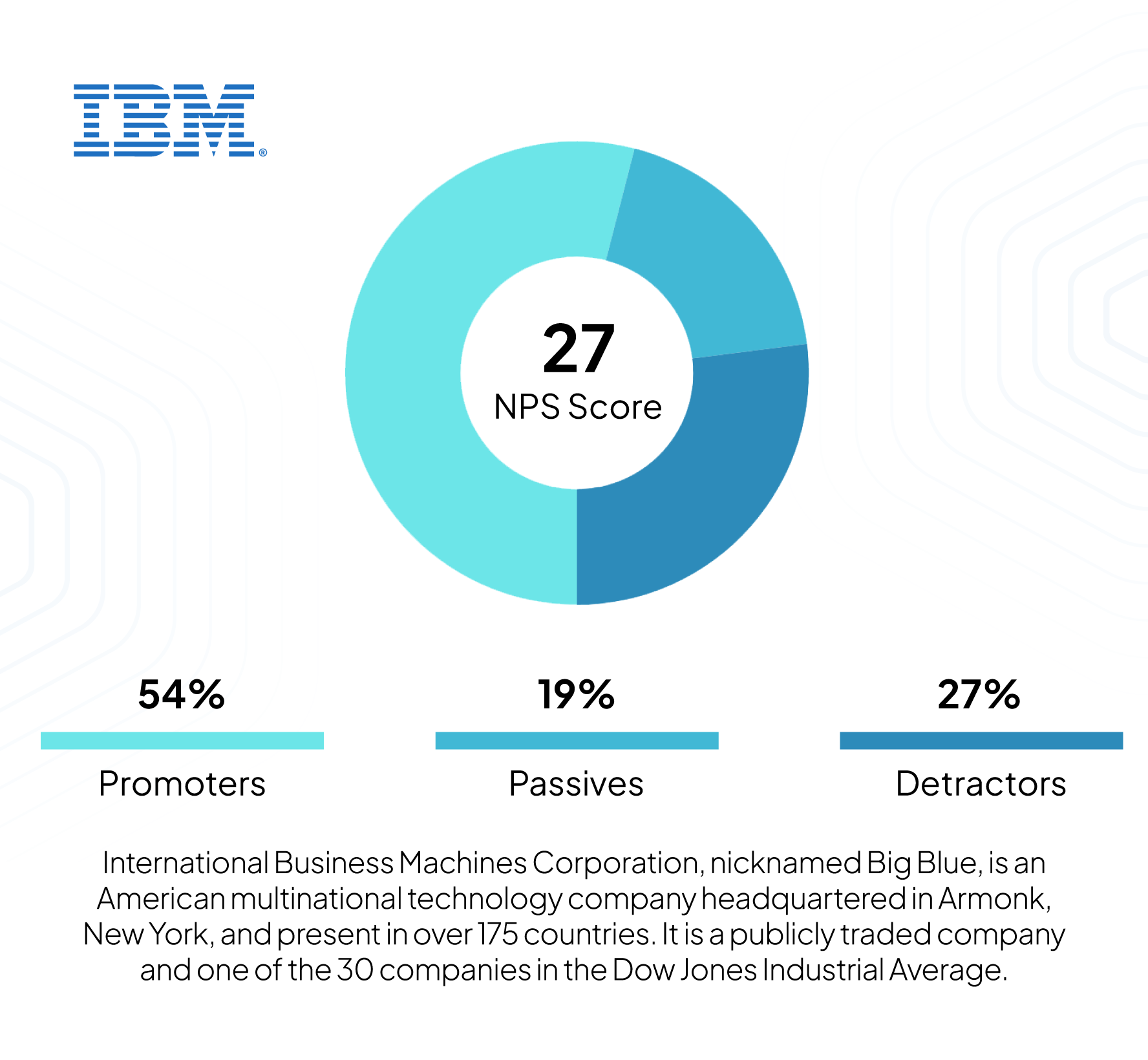
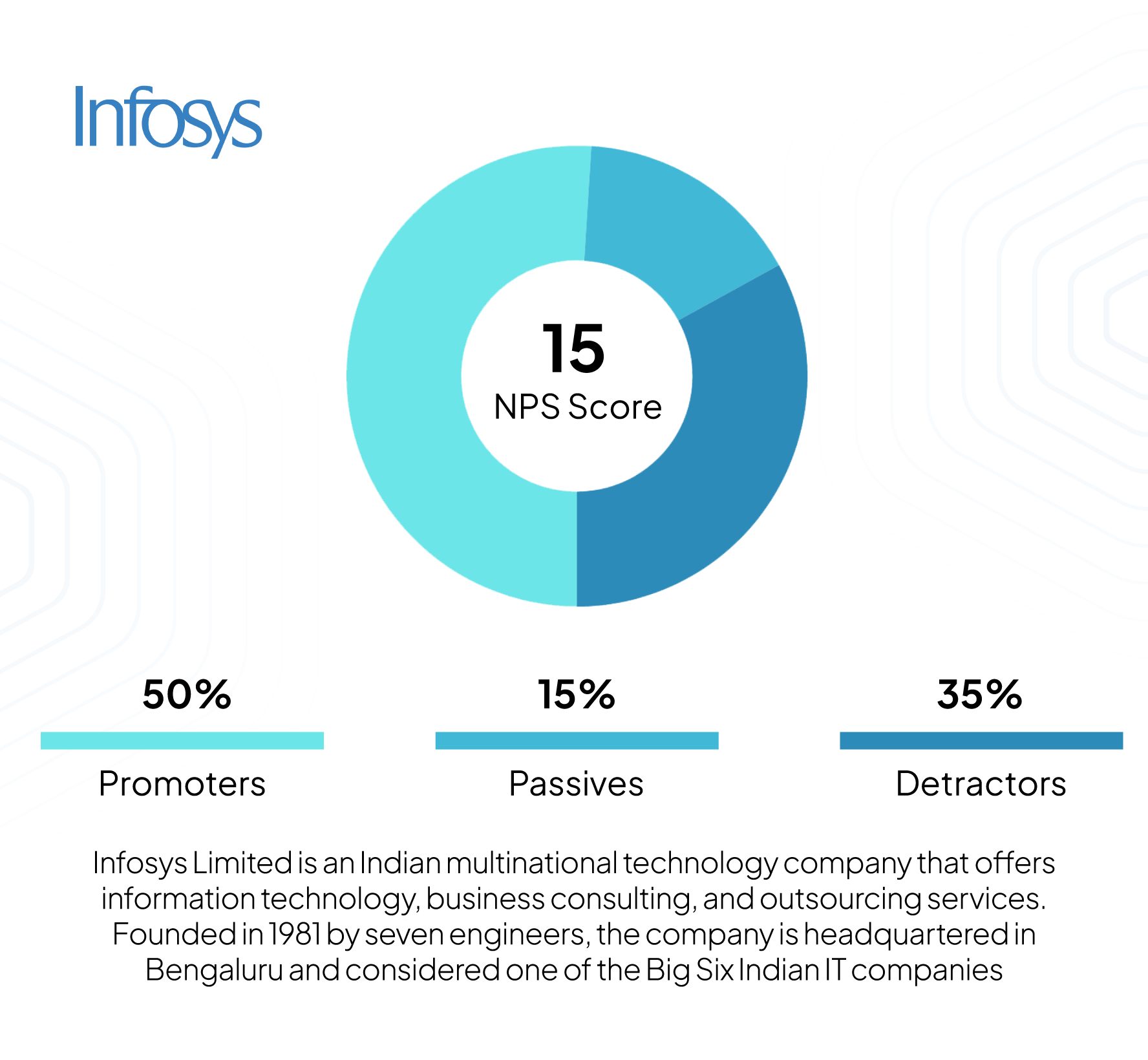
While both companies dominate the IT services landscape, customer satisfaction tells its own story. Below is a visual snapshot of their Net Promoter Scores (NPS) — a key indicator of how likely clients are to recommend them.
IBM’s higher NPS often reflects trust from long-term enterprise clients, especially those in regulated industries like finance and healthcare.
 Infosys typically earns strong NPS from clients valuing agility, cost-effectiveness, and rapid digital transformation.
Pricing: IBM vs Infosys
When it comes to pricing, IBM and Infosys don’t just play in different ranges — they play different games. The difference isn’t just in cost, but in how each company defines value.
Pricing can be a major factor in deciding between IBM and Infosys.
-
- IBM: Generally, IBM is known for its premium pricing, which reflects the enterprise-grade solutions and dedicated support that they offer. The costs are often tied to long-term engagements, typically suited for large corporations with complex needs.
- Infosys: Infosys adopts a more flexible pricing model, particularly for mid-sized businesses looking for scalable solutions. They are generally more affordable but offer a wide range of customisation.
- IBM: Generally, IBM is known for its premium pricing, which reflects the enterprise-grade solutions and dedicated support that they offer. The costs are often tied to long-term engagements, typically suited for large corporations with complex needs.
IBM approaches pricing like an architect. Every project is built for scale — multi-layered, enterprise-grade, and long-term. Its contracts are designed for organizations that view technology as an investment, not an expense.
Typical IBM engagements include software licensing (for platforms like watsonx or hybrid cloud), consulting and integration costs, infrastructure setup, and ongoing support. These projects often start in the hundreds of thousands of dollars and can easily stretch into multi-million-dollar programs.
IBM’s model works best for businesses that want stability, compliance, and transformation at scale. You pay for assurance, reliability, and the kind of structure that large enterprises depend on — but you also commit to slower deployment cycles and higher upfront costs.
Infosys, meanwhile, prices like a transformation partner. Its strength lies in flexibility — modular pricing, outcome-based contracts, and faster rollouts.
Rather than massive multi-year deals, Infosys often works in phases: implement, optimize, expand. It uses pre-built frameworks like Cobalt (for cloud) and Topaz (for automation) to keep delivery costs lower while maintaining enterprise-level impact.
Infosys projects can range from mid-sized digital overhauls around $100K–$500K to large transformation programs that scale into multi-million-dollar engagements — but clients often appreciate the scalability of spend. You can start small and grow as your systems evolve.
So while IBM sells depth and durability, Infosys sells speed and adaptability. IBM suits organizations chasing long-term transformation; Infosys suits those chasing quick wins that build toward scale.
Pricing between IBM and Infosys isn’t black and white — and that’s exactly what makes it tricky for most businesses. At Emvigo, we’ve helped clients evaluate both ends of the spectrum, translating complex proposals into clear cost-benefit outcomes.
IBM’s approach is ideal for enterprises investing in multi-year transformation programs, while Infosys shines for businesses that need faster execution and modular scalability. The real question isn’t which is cheaper — it’s which model aligns better with your business goals, capacity, and timeline.
Our team’s role is to bring clarity to that decision — helping organizations see past headline pricing and focus on total ROI, risk, and readiness. Whether your strategy leans toward IBM’s stability or Infosys’s agility, the best partner is always the one whose pricing logic matches your growth logic.
Emvigo: Why We Stand Out in AI & Software Development
At Emvigo, we believe in offering superior service at competitive pricing, ensuring you get the best value for your investment. Here’s how we stand apart:
-
- Post-Deployment Support: Unlike IBM and Infosys, we provide 24/7 post-deployment support to ensure your solution is always running at peak performance.
- Free Demo Call: Not sure if we’re the right fit? We offer a free demo call to discuss your requirements and show you how our solutions can help you achieve your goals.
- Flexible Pricing: We understand that different businesses have different needs. Our customised pricing models allow you to choose solutions that align with your budget.
- Proven Track Record: We have been recognised as one of the top software development companies in the UK, known for our work with AI, cloud, and digital transformation solutions.
- Post-Deployment Support: Unlike IBM and Infosys, we provide 24/7 post-deployment support to ensure your solution is always running at peak performance.
If you’re looking for a partner that offers innovative technology, affordable pricing, and outstanding customer support, Emvigo is the partner for you. Contact us today to schedule your free demo call and take the next step toward transforming your business.
FAQs
What is the key difference between IBM and Infosys?
IBM focuses on enterprise-grade solutions with an emphasis on AI, cloud, and blockchain, while Infosys is more agile, focusing on digital transformation and automation for businesses of all sizes.
Which company offers better pricing, IBM or Infosys?
Infosys generally offers more affordable pricing, especially for mid-market businesses, while IBM is typically suited for larger enterprises willing to invest in premium solutions.
What are the strengths of IBM?
IBM’s strengths lie in its comprehensive portfolio of services, particularly in AI (IBM Watson), cloud computing, and blockchain technologies.
What makes Emvigo a better choice than IBM or Infosys?
Emvigo offers superior post-deployment support, customised pricing, and agile solutions for businesses of all sizes, ensuring you get value without compromise.
How can Emvigo help with digital transformation?
At Emvigo, we specialise in AI, cloud, and automation solutions that help businesses navigate their digital transformation journey seamlessly, with dedicated support at every step.