
Choosing the right IT consulting partner is not a small decision. Many digital projects slow down or fail simply because the partner was not the right fit from the start. That is why the IBM vs Cognizant comparison matters so much for enterprises and startups today.
Both IBM and Cognizant are global IT service providers. Both support digital transformation, cloud, and AI projects. Yet the way they work, deliver, and price their services is very different.
This guide breaks everything down in clear and simple terms so business leaders can make a confident decision.
IBM vs Cognizant comparison for modern businesses
The IBM vs Cognizant debate is not about brand reputation alone. It is about project fit, delivery speed, cost expectations, and long-term support.
IBM is known for enterprise-grade systems and research-driven consulting. Cognizant is known for digital services and delivery-focused execution. Understanding this difference early helps avoid delays and budget surprises.
TL;DR: IBM vs Cognizant key takeaways
-
- IBM focuses on large enterprise transformation and complex systems
- Cognizant focuses on digital delivery and flexible execution
- IBM suits compliance-heavy and long-term programmes
- Cognizant suits fast-moving and cost-aware businesses
- The right choice depends on project scale, timeline, and flexibility needs
IBM company profile and consulting focus
IBM is one of the most established enterprise IT firms in the world. Its consulting services are designed for scale, stability, and long-term transformation.
Many organisations choose IBM when projects involve complex decision-making, large data environments, and multiple stakeholders across regions. Its experience helps businesses manage risk while planning for future growth.
IBM business consulting services explained
IBM business consulting services usually include:
-
- Enterprise digital transformation
- Hybrid cloud and infrastructure modernisation
- AI platforms and data systems
- Cybersecurity and compliance
- Legacy system modernisation
IBM works extensively with banks, healthcare organisations, governments, and global enterprises. These projects often involve strict rules, complex data, and high risk.
How IBM approaches enterprise projects
IBM follows a structured and planned delivery model. Projects move through defined phases with detailed documentation and governance. This works well when requirements are clear and unlikely to change.
However, this structure can feel slow for businesses that need quick decisions or frequent changes. This difference is important in the IBM vs Cognizant comparison.
Cognizant company profile and digital services approach
Cognizant built its reputation around digital services and IT outsourcing. Its focus is on execution speed and adaptability.
Many businesses work with Cognizant when they need to modernise systems quickly, integrate new digital tools, or scale delivery without long onboarding cycles. The company is often chosen for hands-on delivery across cloud, data, and application services.
Cognizant digital transformation services explained
Cognizant digital services often include:
-
- Application development and modernisation
- Cloud migration and DevOps
- Digital product engineering
- Data analytics and AI solutions
- IT outsourcing and managed services
Cognizant works with both large enterprises and growing startups. Its engagement model is generally more flexible than traditional enterprise consultancies.
How Cognizant delivers digital projects
Cognizant teams adapt quickly to evolving business needs. This helps companies that are still refining product scope or market direction. That flexibility is a key reason many businesses lean towards Cognizant in the Cognizant vs IBM discussion.
IBM vs Cognizant AI and automation capabilities
AI is now central to digital transformation decisions. Both companies invest heavily in this area, but their approaches differ.
IBM AI solutions and Watson platform
IBM’s AI strategy is built around IBM Watson, an enterprise AI platform used across industries.
IBM AI is commonly applied to:
-
- Predictive analytics for demand, risk, and forecasting
- Intelligent automation across business and IT processes
- Enterprise data analysis using large, complex datasets
- AI-driven customer support through virtual agents and chat systems
- Decision intelligence for leadership and operations teams
IBM has also expanded Watson into watsonx, which focuses on building, training, and governing AI models using trusted enterprise data. This helps organisations manage AI responsibly while meeting compliance and security needs.
Watson works best when organisations already have structured data, defined processes, and a long-term AI roadmap. It offers strong control, governance, and depth, but projects usually require higher budgets, longer timelines, and experienced internal teams to get full value.
Cognizant AI and intelligent automation services
Cognizant focuses on practical AI use cases rather than building everything around a single platform. It creates AI solutions using cloud AI services, open frameworks, and existing enterprise tools.
Cognizant AI services often include:
-
- Business process automation for faster operations
- AI-powered analytics to support real-time decisions
- Intelligent chatbots for customer and internal support
- Personalised digital experiences across web and mobile
- AI integration into existing applications and workflows
Cognizant also works closely with hyperscalers like AWS, Microsoft Azure, and Google Cloud to deploy AI quickly. This approach suits businesses that want results without long setup cycles or heavy infrastructure changes.
In the IBM vs Cognizant AI and automation capabilities comparison, IBM offers deeper enterprise platforms and governance, while Cognizant focuses on speed, flexibility, and faster business outcomes.
IBM vs Cognizant consulting services and business impact comparison
| Area / Business Factor | IBM | Cognizant |
| Core focus | Enterprise systems | Digital delivery |
| Delivery style | Structured and long-term | Agile and flexible |
| AI approach | Watson and enterprise AI | Practical AI use cases |
| Cloud focus | Hybrid and private cloud | Public and cloud-native |
| Best suited for | Large enterprises | Startups and growing firms |
| Decision speed | Slower approvals | Faster execution |
| Engagement flexibility | Contract-driven | More adaptable |
| Handling scope changes | Costly and slow | Easier to manage |
| Time to market | Longer | Faster |
| Post-launch support | Separate contracts | Easier extensions |
| Fit for growth-stage firms | Limited | Strong |
IBM vs Cognizant pricing and cost expectations
Exact pricing is rarely published by large consulting firms. However, credible industry benchmarks give a clear picture of what businesses can expect.
Pricing comparison table
| Pricing factor | IBM Consulting | Cognizant |
| Typical project starting point | Around $300,000+ for large enterprise engagements | Around $100,000+ for mid-sized to enterprise projects |
| Hourly rate benchmarks | Roughly $250–$850 per hour for senior consulting expertise | Roughly $200–$300+ per hour using blended delivery teams |
| Pricing models | Structured, long-term programme-based contracts | Time-and-materials, fixed-price, hybrid, and outcome-based |
| Cost structure | Higher due to platform-led delivery and enterprise governance | More flexible due to global delivery centres |
| AI and cloud cost impact | Higher budgets when AI platforms, cloud, and compliance are included | More controlled costs through phased and modular delivery |
| Best suited for | Large enterprises with long-term transformation plans | Businesses seeking cost efficiency with scalable delivery |
Pricing takeaway for businesses
In the IBM vs Cognizant comparison, IBM generally sits at the higher end of the cost spectrum. Cognizant usually offers more cost-efficient delivery without sacrificing scale.
How to decide between IBM vs Cognizant based on your project type
The right choice often becomes clear when viewed through project needs.
Choose IBM if your project requires:
-
- Enterprise-wide transformation – Large-scale projects affecting multiple departments and regions, where governance and process consistency are critical.
- Legacy system modernisation – Updating old IT systems while ensuring minimal disruption to ongoing operations.
- Strong compliance and governance – Projects in highly regulated industries like banking, healthcare, or government, where risk management is key.
- Long-term AI and data platforms – Implementing AI solutions and data platforms that require structured planning, deep integration, and ongoing optimisation.
Choose Cognizant if your project requires:
-
- Digital product development – Building web or mobile products quickly, with iterative improvements and user-focused design.
- Cloud migration and DevOps – Moving systems to public or cloud-native environments with automated deployment and continuous integration.
- Faster go-to-market – Projects that need quick delivery cycles to seize market opportunities or meet evolving customer demands.
- Flexible outsourcing models – Using adaptable engagement models for scaling teams, adjusting scope, or testing new solutions without long-term contracts.
This breakdown makes it easier for businesses to match project requirements with the right consulting partner.
Risks businesses should consider before choosing IBM or Cognizant
Large consulting firms bring scale, expertise, and global experience. However, there are limitations that businesses should consider before committing.
Common risks include:
-
- Slower decisions due to layered processes – Multiple approval levels can delay project milestones, especially in fast-moving markets.
- Limited flexibility once scope is fixed – Changes to project requirements may require renegotiation or extra costs, reducing adaptability.
- Higher costs for changes and extensions – Modifying the project after launch can be expensive, particularly when advanced technologies like AI or cloud are involved.
- Separate contracts for long-term support – Post-launch maintenance and support often need additional agreements, adding complexity and potential delays.
These risks don’t mean IBM or Cognizant are poor choices. They are best suited for projects where scale, governance, and enterprise expertise outweigh the need for rapid flexibility.
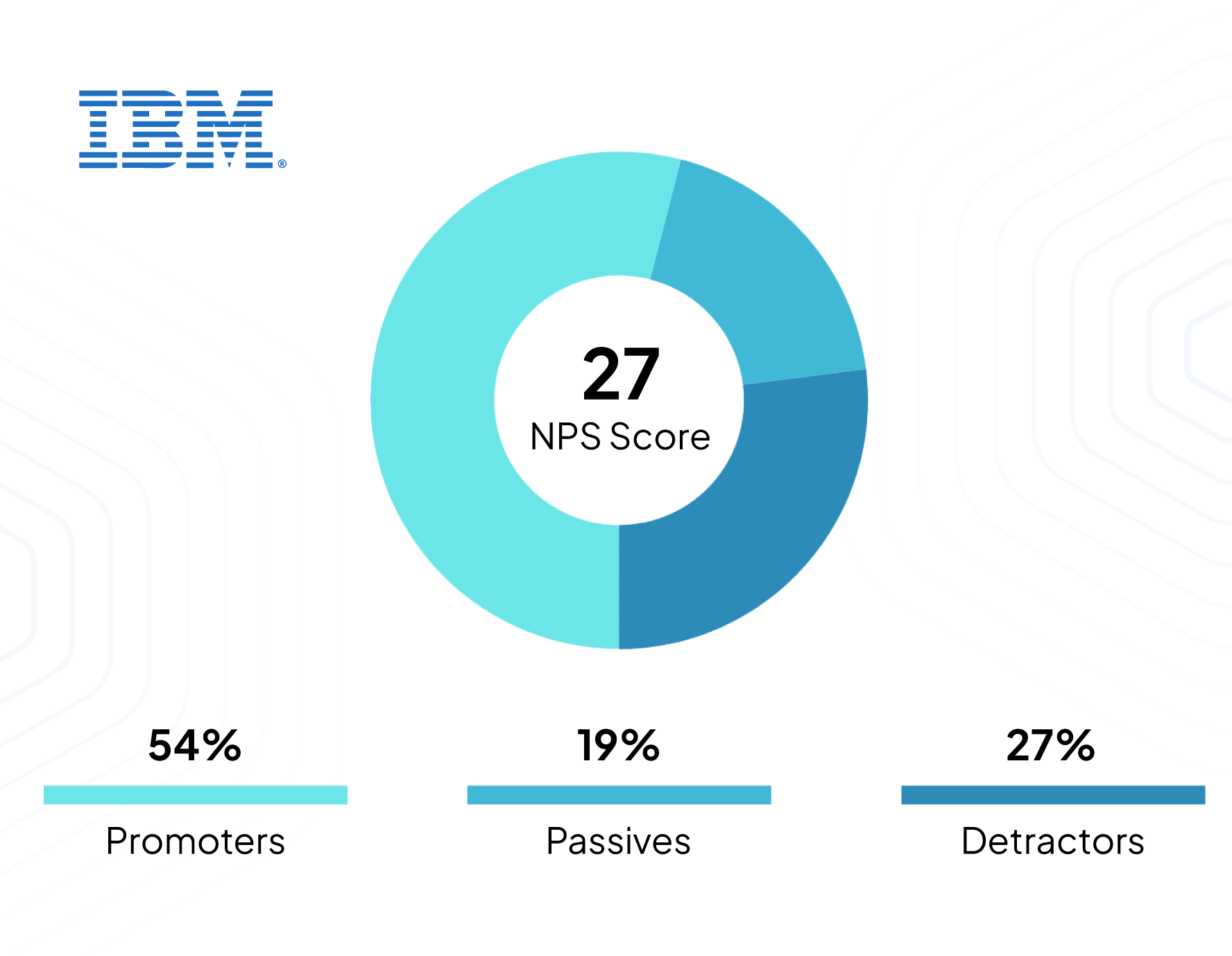
Net Promoter Score comparison for IBM vs Cognizant
Many decision-makers also consider Net Promoter Score, or NPS, when choosing a partner.
IBM’s Net Promoter Score (NPS)
Cognizant’s Net Promoter Score (NPS)
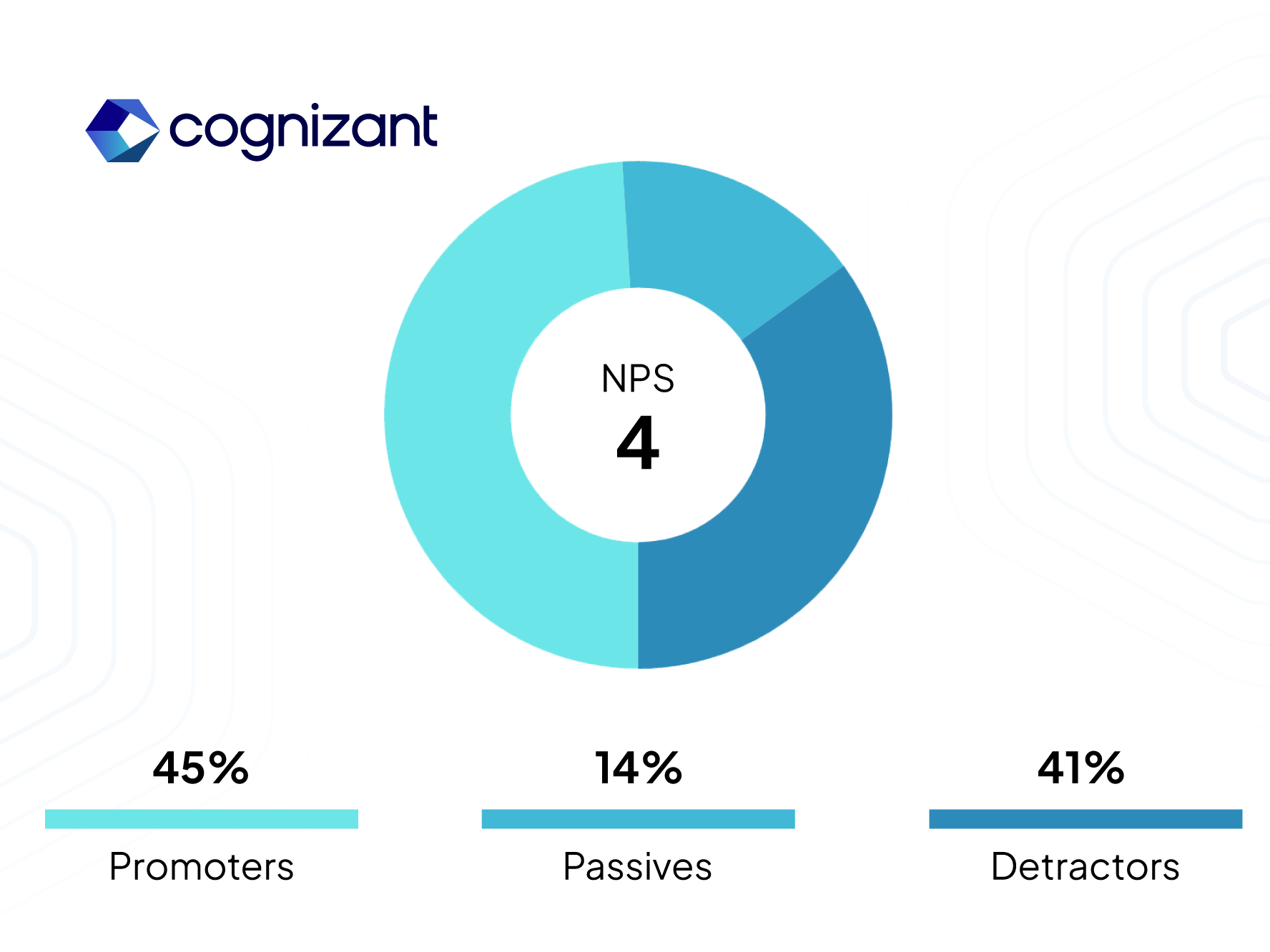
NPS should not be the only factor, but it gives useful insight into client experience and ongoing collaboration.
Common doubts businesses have when choosing between IBM vs Cognizant
Will the partner understand our business goals clearly?
IBM works best with fixed and stable goals. Cognizant adapts better when priorities change.
Are we paying for outcomes or brand value?
IBM pricing reflects enterprise research and platforms. Cognizant pricing often aligns more closely with delivery outcomes.
What happens after launch?
With large firms, post-launch support usually requires new contracts. This is often overlooked early.
Is there a more balanced option?
Many businesses now seek partners that combine enterprise thinking with flexibility and better pricing.
What many growing businesses look for beyond large consulting firms
Not every business needs a large consulting contract. Many mid-sized businesses and startups want faster results, closer collaboration, and practical solutions.
This is where Emvigo fits naturally.
Emvigo focuses on building MVPs, scalable digital products, and AI-powered solutions without unnecessary complexity. The team works closely with business leaders from idea to launch and continues support after deployment.
Emvigo core strengths include:
-
- MVP development for startups and mid-sized initiatives
- Practical AI solutions directly tied to real business goals
- Web and mobile application development for fast, scalable delivery
- Flexible engagement models and transparent pricing
- Strong post-deployment support to ensure growth and stability
Instead of long contracts, Emvigo focuses on clarity, speed, and measurable outcomes, making it a strong choice for growing businesses that want quality without enterprise-level overhead.
Ready to bring your idea to life? Contact Emvigo today to discuss your project, explore AI-powered solutions, or book a free consultation and see how we can help you scale efficiently.
Quick Answers: IBM vs Cognizant FAQs
Which is better for enterprises, IBM vs Cognizant?
IBM suits large enterprises with complex systems. Cognizant suits businesses that need faster execution.
How do IBM and Cognizant compare in AI services?
IBM offers Watson and enterprise AI platforms. Cognizant focuses on practical AI use cases with quicker delivery.
Which is better for cloud projects, IBM vs Cognizant?
IBM works well for hybrid cloud needs. Cognizant is better for cloud-native and public cloud projects.
Can startups work with IBM or Cognizant?
Startups usually find Cognizant more flexible. IBM suits later-stage or enterprise-level projects.
Are there alternatives to IBM and Cognizant?
Yes. Many businesses now choose focused partners like Emvigo for MVPs, AI solutions, and scalable development.