
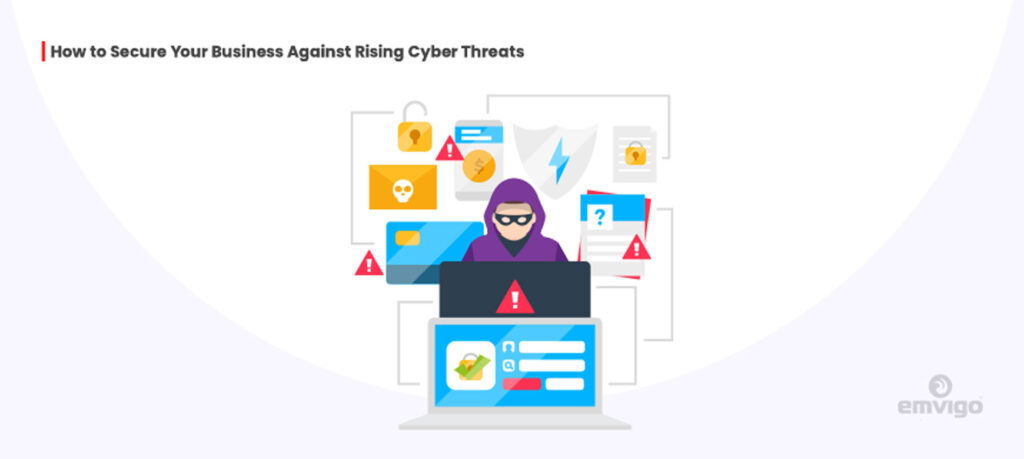
In today’s digital age, cybersecurity for businesses isn’t just a technical requirement—it’s a cornerstone of survival and growth. With every business process becoming more connected, the risk of cyberattacks has grown exponentially. Hackers are no longer targeting only large corporations; small and medium businesses are increasingly in their sights, often because they lack robust defenses.
Threats range from ransomware that can freeze critical operations to AI-driven phishing scams designed to trick even the most vigilant employees. Beyond the immediate financial loss, a successful attack can damage customer trust, compromise sensitive data, and disrupt your entire business ecosystem. In this blog, we’ll find the most common cyber threats businesses face today and share practical strategies to strengthen your cybersecurity defenses.
Rising Cyber Threats: What Every Business Must Know
Cyber threats have intensified, with small and medium-sized businesses (SMBs) increasingly targeted due to limited resources and awareness. Understanding these evolving threats is crucial for developing effective defense strategies.
1. Ransomware
Ransomware continues to be one of the most destructive cyber threats. This type of malware encrypts a company’s critical files or entire systems and demands a ransom — often in cryptocurrency — to restore access. The impact is immediate: halted operations, lost revenue, reputational damage, and potential legal consequences.
Why Businesses Are at Risk
Cybercriminals increasingly target small and medium-sized businesses (SMBs) because they often lack sophisticated cybersecurity infrastructure. A single vulnerability, such as an unpatched system or weak credentials, can provide attackers with full access to sensitive data.
Latest Data & Trends
-
- In 2025, ransomware attacks increased by 36% compared to the previous year, with 92 disclosed incidents in January alone.
- The average ransom payment reached $1 million, with recovery costs averaging $1.5 million.
Attackers are now using AI to craft highly targeted ransomware campaigns, making it harder for traditional defenses to detect and prevent attacks.
2. Phishing & AI-Powered Scams
Phishing attacks remain one of the most prevalent and damaging cyber threats for businesses. These attacks involve fraudulent emails, messages, or calls designed to trick employees into revealing sensitive information, such as login credentials, financial data, or personal information.
Why Businesses Are Vulnerable
Even the most sophisticated security systems can be bypassed if employees fall for phishing attempts. Cybercriminals exploit human psychology — urgency, fear, curiosity — to manipulate targets into taking harmful actions. With AI tools now generating highly realistic phishing emails and messages, the risk has escalated significantly.
Latest Data & Trends
-
- Phishing is responsible for approximately 73% of all breaches, making human error the leading cause of data compromise.
- AI-powered phishing campaigns are increasing in sophistication, creating messages that are nearly indistinguishable from legitimate communications.
Phishing and AI-powered scams highlight the critical role of employees as the first line of defense. Investing in security awareness training, phishing simulations, and AI-driven email filters can significantly reduce the likelihood of successful attacks. Building a human firewall is just as important as deploying technical defenses.
3. Insider Threats
While much attention focuses on external cyberattacks, insider threats remain a significant risk for businesses. Insider threats occur when employees, contractors, or partners with legitimate access to company systems misuse their privileges — either accidentally or maliciously.
Why Businesses Are Vulnerable
Insider threats are particularly dangerous because they bypass traditional security measures. Even well-secured networks can be compromised if an insider shares sensitive information, falls victim to phishing, or intentionally leaks data. Remote work and increased reliance on cloud services have expanded these risks, making monitoring and access control essential.
Latest Data & Trends
-
- 56% of organizations reported experiencing an insider threat incident in the past year.
- Insider incidents can be costly, with average losses per incident reaching $779,000, and organizations reporting annual costs up to $17.4 million.
- Human error remains the leading cause, but malicious insiders are responsible for increasing numbers of deliberate breaches.
Insider threats underscore the importance of strict access controls, monitoring systems, and employee education. Combining technical safeguards with a culture of accountability and awareness can significantly reduce the risk of internal breaches. Employees aren’t just your workforce — they are also your first line of defense.
4. DDoS (Distributed Denial of Service) Attacks
Distributed Denial of Service (DDoS) attacks are a growing threat, capable of bringing even well-protected businesses to a standstill. These attacks flood networks, servers, or websites with massive traffic, rendering services unavailable to legitimate users.
Why Businesses Are Vulnerable
DDoS attacks are often used as a distraction while other malicious activities, like data breaches or ransomware attacks, are carried out. They can disrupt online operations, e-commerce platforms, and customer services, leading to lost revenue and damaged reputation. Small and medium businesses, which may lack sophisticated traffic monitoring and mitigation strategies, are particularly at risk.
Latest Data & Trends
-
- In 2025, Cloudflare mitigated 7.3 million DDoS attacks in Q2 alone, demonstrating both the scale and frequency of these threats.
- In October 2025, a gaming hosting provider was hit with a DDoS attack peaking at 6 terabits per second, ranking among the top 10 largest DDoS attacks ever recorded.
- Attackers increasingly use AI-driven botnets to automate and intensify these attacks, making detection and mitigation more challenging.
DDoS attacks highlight the importance of robust network monitoring, scalable infrastructure, and DDoS mitigation strategies. In 2025, businesses must treat DDoS preparedness as a core part of their cybersecurity strategy to ensure uninterrupted operations and protect their digital reputation.
5. Data Breaches & Credential Compromise
Data breaches are one of the most costly and damaging cyber threats businesses face. They occur when unauthorised parties gain access to sensitive information, such as customer records, financial data, or proprietary business information. Credential compromise — the theft or misuse of login credentials — is often the leading cause of these breaches.
Why Businesses Are Vulnerable
Even robust security systems can be bypassed if credentials are stolen or weak passwords are used. The rise of remote work, cloud adoption, and AI-assisted phishing attacks has increased the exposure of sensitive data. Small and medium-sized businesses (SMBs) are particularly at risk due to limited cybersecurity resources.
Latest Data & Trends
-
- The average global cost of a data breach in 2025 is $4.44 million, a 9% decrease from 2024.
- In the United States, the average cost of a breach has reached an all-time high of $10.22 million, driven by regulatory fines and escalation costs.
- Credential theft is responsible for approximately 80% of breaches, underscoring the importance of strong authentication methods. (verizon.com DBIR 2023)
Protecting sensitive information requires strong password policies, multi-factor authentication (MFA), encryption, and continuous monitoring. Businesses that prioritize securing credentials and promptly addressing breaches can significantly reduce risk and protect their reputation.
6. Cloud & Remote Work Vulnerabilities
As businesses increasingly rely on cloud services and remote work, new cybersecurity risks have emerged. While cloud platforms offer scalability and flexibility, misconfigurations, weak access controls, and unsecured endpoints can expose sensitive data to cybercriminals. Similarly, remote work environments can increase vulnerability if devices and networks are not properly secured.
Why Businesses Are Vulnerable
Cloud and remote work models often stretch IT resources thin, leaving gaps in security monitoring, access management, and data protection. Attackers exploit these gaps to gain unauthorized access, deploy ransomware, or exfiltrate sensitive data.
Latest Data & Trends
-
- 61% of organizations reported experiencing breaches related to cloud services, highlighting the need for robust cloud security measures.
- Major cloud outage example: In October 2025, Amazon Web Services (AWS) experienced a global outage affecting websites and apps worldwide, demonstrating how centralized cloud platforms can become critical single points of failure.
- Misconfigured cloud storage accounts and unsecured remote endpoints remain among the top causes of breaches, with attackers increasingly using automated tools to exploit these weaknesses.
Securing cloud and remote work environments requires strong access controls, endpoint security, regular audits, and employee awareness training. Businesses must treat cloud and remote work vulnerabilities as a central part of their cybersecurity strategy to protect sensitive data and maintain operational continuity.
The cybersecurity landscape presents evolving challenges that require businesses to be proactive and vigilant. Understanding these rising threats and implementing robust security measures are essential steps in safeguarding your organisation against potential cyberattacks.
Why Small and Medium Businesses (SMBs) Are Prime Targets
Small and medium-sized businesses (SMBs) have become prime targets for cybercriminals, and for good reason. Unlike large enterprises with dedicated IT teams and robust security infrastructures, SMBs often operate with limited cybersecurity resources, making them easier to breach. Many SMBs store sensitive customer information, financial records, and proprietary data — all of which are highly valuable to attackers. In addition, SMBs frequently act as partners or vendors to larger organizations, meaning a breach in a smaller business can provide cybercriminals with a gateway into more secure networks. Surprisingly, many SMBs believe their size makes them less likely to be attacked, yet 94% of SMBs have experienced or are aware of cyber threats, with attacks on these businesses rising by 16%, including ransomware, phishing, and AI-powered scams.
The consequences are severe: financial losses, reputational damage, and operational disruption can be devastating for smaller businesses. That’s why proactive measures, such as employee training, multi-factor authentication, and regular risk assessments, are crucial for SMBs looking to secure their digital assets. Emvigo guides and supports SMBs in strengthening their cybersecurity posture, helping them stay prepared against rising threats while maintaining compliance and operational resilience.
Essential Cybersecurity Best Practices for Businesses
Businesses of all sizes must adopt proactive measures to safeguard their data, systems, and operations. Implementing essential cybersecurity best practices is like building a fortress — every layer strengthens your defenses and reduces the likelihood of a breach.
1. Conduct Regular Risk Assessments
Understanding your organization’s unique vulnerabilities is the first step toward protection. Regular risk assessments help identify weak points in networks, software, and processes, allowing you to prioritise security efforts and allocate resources effectively.
2. Keep Software and Systems Updated
Outdated software is one of the most common entry points for cybercriminals. Patching known vulnerabilities promptly prevents exploits like the WannaCry ransomware attack, which targeted unpatched Windows systems worldwide.
3. Implement Strong Access Control and Authentication
Use multi-factor authentication (MFA) for all critical accounts and systems. MFA can block over 80% of account compromise attacks, adding an essential layer of protection against credential theft.
4. Encrypt Sensitive Data
Encryption protects data both in transit and at rest. Even if unauthorized parties access your information, encryption ensures it remains unreadable and secure.
5. Employee Training & Awareness – Building a Human Firewall
Employees are often the first line of defense. Cybersecurity awareness training helps your workforce recognize phishing emails, social engineering tactics, and other threats before they can cause damage. Key practices include:
-
- Regular security awareness sessions
- Clear cyber hygiene policies
- Phishing simulations to test and educate staff
- Guidelines for secure remote access
6. Backup Data Regularly
Frequent, secure backups ensure that your business can recover quickly from ransomware attacks, accidental deletions, or system failures. Store backups offline or in a secure cloud environment.
7. Deploy Essential Security Tools
Investing in cybersecurity tools provides proactive and reactive defense mechanisms:
-
- Firewalls and antivirus for endpoint protection
- Security Information and Event Management (SIEM) for real-time monitoring
- Intrusion Detection and Prevention Systems (IDPS)
- Vulnerability scanners to identify weaknesses
- Data Loss Prevention (DLP) solutions to prevent leaks
8. Establish Clear Policies and Compliance Measures
Ensure compliance with relevant regulations such as GDPR, CCPA, or HIPAA. Develop policies for data handling, breach reporting, and third-party risk management. Regular audits and assessments help maintain a strong security posture.
Investing in Cybersecurity Tools & Technologies
A modern business cannot rely solely on employee awareness and policies to stay secure. Just like a medieval knight would not enter battle armed only with a sword, companies need a layered cybersecurity approach with advanced tools and technologies to protect against evolving threats.
1. Firewalls, Antivirus, and Endpoint Security
These are the frontline defenses for your network and devices. Firewalls filter unwanted traffic, antivirus software detects and neutralizes malware, and endpoint security ensures that every device connecting to your network is monitored and protected.
2. Multi-Factor Authentication (MFA) and Password Managers
MFA adds an additional layer of security beyond passwords, significantly reducing the risk of account compromise. Password managers help employees generate and store strong, unique passwords for every account, preventing credential reuse — a common attack vector.
3. Security Information and Event Management (SIEM) Tools
SIEM platforms provide real-time monitoring and analysis of security events. They help detect unusual activities, generate alerts for potential threats, and allow rapid response to incidents, minimizing damage.
4. Intrusion Detection and Prevention Systems (IDPS)
IDPS solutions monitor network traffic for malicious activity, automatically blocking or mitigating attacks in real time. They act as a proactive shield against both external and internal threats.
5. Data Loss Prevention (DLP) Solutions
DLP tools prevent sensitive data from leaving your organization, either accidentally or maliciously. They are essential for maintaining compliance with regulations like GDPR, HIPAA, and CCPA.
6. Vulnerability Scanners
Regular scanning of systems and applications identifies security gaps before cybercriminals can exploit them. Vulnerability management ensures timely patching and reduces the overall attack surface.
7. Cloud Security Tools
As more businesses migrate to the cloud, specialised cloud security tools protect data and applications in cloud environments. These tools monitor access, detect misconfigurations, and safeguard against ransomware, phishing, and other cloud-specific threats.
Investing in the right cybersecurity tools is not optional — it’s essential. Combining these technologies with best practices, employee awareness, and compliance measures creates a multi-layered defense strategy that reduces risks, strengthens resilience, and ensures business continuity.
For businesses looking for expert guidance, Emvigo’s cybersecurity services provide assessments, implementation support, and training to build a robust security posture tailored to your organization’s needs.
The Role of AI in Modern Cybersecurity
Artificial Intelligence (AI) is transforming both sides of the cybersecurity battlefield. On one hand, it empowers organisations with advanced detection, automation, and real-time threat analysis. On the other, it gives cybercriminals new tools to launch more sophisticated and targeted attacks.
AI-driven cybersecurity solutions help businesses identify anomalies faster than human teams ever could. Machine learning algorithms continuously analyse network behaviour, flag suspicious activity, and predict potential vulnerabilities before they’re exploited. This proactive approach enables faster response times and reduces the impact of breaches.
However, the same technology is also being weaponised by attackers. AI-powered phishing scams, for instance, use natural language models to craft highly convincing emails that can easily deceive even trained employees. Deepfake videos and synthetic identities are also emerging as new forms of digital deception, blurring the line between legitimate and malicious communications.
Businesses must recognise AI’s dual nature — as both a powerful defence mechanism and a potential threat. The key lies in leveraging AI responsibly, integrating it into your cybersecurity strategy, and staying informed about how adversaries are using it.
At Emvigo, we help businesses harness the benefits of AI securely — guiding them in adopting intelligent, future-ready digital solutions while ensuring security remains at the core of every innovation. Schedule a free consultation today to learn how we can help your business stay protected and future-ready in the evolving digital landscape.
Compliance & Regulatory Considerations for Cybersecurity
businesses collect and process vast amounts of sensitive information, making them prime targets for cyberattacks. To protect their customers, safeguard their reputation, and avoid costly legal penalties, organisations must comply with cybersecurity regulations and industry standards. Compliance is not just a legal obligation—it’s a key part of a strong security posture.
Why Compliance Matters
Failing to comply with regulations such as GDPR, CCPA, HIPAA, or PCI-DSS can lead to severe fines, lawsuits, and reputational damage. Compliance frameworks also help businesses establish structured policies, processes, and technologies to protect data from breaches.
Key Compliance Considerations
-
- Understand the Legal Landscape: Identify the regulations relevant to your business based on industry, geography, and the type of data you handle.
- Data Security Policies: Develop comprehensive policies covering data encryption, access control, retention, and incident response.
- Data Breach Response Plan: Establish a plan to detect, contain, and report breaches in line with legal requirements.
- Employee Training: Educate employees about data protection responsibilities, policies, and emerging threats.
- Regular Audits and Assessments: Conduct audits to evaluate adherence to regulations and identify potential gaps in security.
- Third-Party Risk Management: Assess and monitor the security practices of vendors and partners who have access to your systems.
- International Data Transfers: Ensure compliance with regulations governing cross-border data flows, such as GDPR’s transfer requirements.
- Understand the Legal Landscape: Identify the regulations relevant to your business based on industry, geography, and the type of data you handle.
Compliance and cybersecurity go hand-in-hand. Meeting regulatory requirements ensures not only legal adherence but also strengthens overall security posture. SMBs and large enterprises alike should adopt a proactive compliance strategy.
Building a Cyber-Resilient Future for Your Business
Cyber threats today are no longer about if they’ll happen — it’s about when. Modern attacks are more sophisticated than ever, capable of disrupting operations, exposing sensitive data, and damaging your brand within minutes. That’s why cyber resilience is essential. It goes beyond basic security tools — it’s about preparing for attacks, responding quickly, and bouncing back stronger.
A truly cyber-resilient business blends three pillars: the right technology, well-structured processes, and a security-aware workforce. When these come together, your organization can adapt to evolving threats instead of reacting to them.
By using advanced security tools, staying compliant with regulations like GDPR and HIPAA, and empowering employees through continuous awareness training, businesses can significantly reduce risk while safeguarding critical systems and data. Cyber resilience helps you maintain business continuity, protect customer trust, and stay financially stable even in the face of ransomware, phishing, or AI-powered attacks.
At Emvigo, we help businesses turn cybersecurity into a competitive strength. From risk assessments and incident-response planning to cloud security and employee training, our team ensures you’re prepared for today’s threats — and tomorrow’s. Cyber resilience isn’t just about defense; it’s about giving your business the confidence to grow securely in a digital-first world.
Frequently Asked Questions
What is cybersecurity for business and why is it important?
Cybersecurity for business involves protecting digital assets, data, and systems from cyber threats. It prevents financial loss, reputational damage, and operational disruptions.
What are the most common cyber threats businesses face?
Ransomware, phishing, insider threats, DDoS attacks, data breaches, and AI-powered scams are the leading threats targeting businesses today.
Why are SMBs more vulnerable to cyberattacks?
SMBs often have limited IT resources, weaker security infrastructure, and less employee training, making them easier targets for cybercriminals.
How can businesses protect themselves from ransomware?
Regular data backups, timely software updates, multi-factor authentication, and employee awareness programs significantly reduce ransomware risks.
What role do employees play in cybersecurity?
Employees act as the first line of defense; training them to recognize phishing, social engineering, and unsafe practices strengthens overall security.
What is an incident response plan and why is it needed?
An incident response plan outlines steps to detect, contain, and recover from cyberattacks, minimizing downtime and financial or reputational losses.
Are cloud services safe for businesses?
Cloud services are generally secure, but misconfigurations, weak access controls, and unsecured endpoints can create vulnerabilities if not properly managed.
How often should businesses conduct risk assessments?
Businesses should conduct risk assessments at least annually or after major system changes to identify and address vulnerabilities promptly.
What are the essential cybersecurity tools for businesses?
Firewalls, antivirus, SIEM, IDPS, DLP solutions, multi-factor authentication, and vulnerability scanners form the backbone of a strong security posture.