
I’ve seen many businesses struggle with on-premise servers that seem fine—until scaling becomes difficult, maintenance costs rise, and launching new applications turns into a headache. That’s usually when the decision comes: it’s time to move to the cloud.
From my experience, cloud migration is about much more than just moving data. It’s about working with the right partner who can handle the complexity, keep your systems secure, and make sure the migration supports your business goals. Pick the wrong partner, and you face downtime and extra costs. Pick the right one, and your operations become faster, more efficient, and ready for growth.
In this guide, I’ve put together a list of top cloud migration companies. I’ll explain what makes them stand out and how they can help make your cloud journey smooth, strategic, and successful.
What Makes a Great Cloud Migration Partner?
Before diving into specific companies, let’s establish what separates exceptional migration partners from average ones.
Proven methodology and frameworks. Top partners don’t wing it—they follow structured approaches like AWS’s Cloud Adoption Framework or Well-Architected principles to ensure migrations are thorough and repeatable.
Industry-specific experience. A partner who’s migrated healthcare systems understands compliance differently than one who’s worked primarily with e-commerce platforms. Domain expertise matters.
Transparent pricing and timelines. Vague estimates are red flags. Quality partners provide detailed breakdowns of costs, phases, and expected timelines based on your specific infrastructure.
Post-migration support. The migration itself is just the beginning. Your partner should offer optimisation, monitoring, and ongoing architectural guidance.
Key insight: “The best cloud migration isn’t the fastest—it’s the one that aligns perfectly with your business objectives whilst building a foundation for future growth.”
Top Cloud Migration Companies to Consider in 2025
Emvigo – Your Partner for Smart, Scalable, and Future-Ready Cloud Solutions
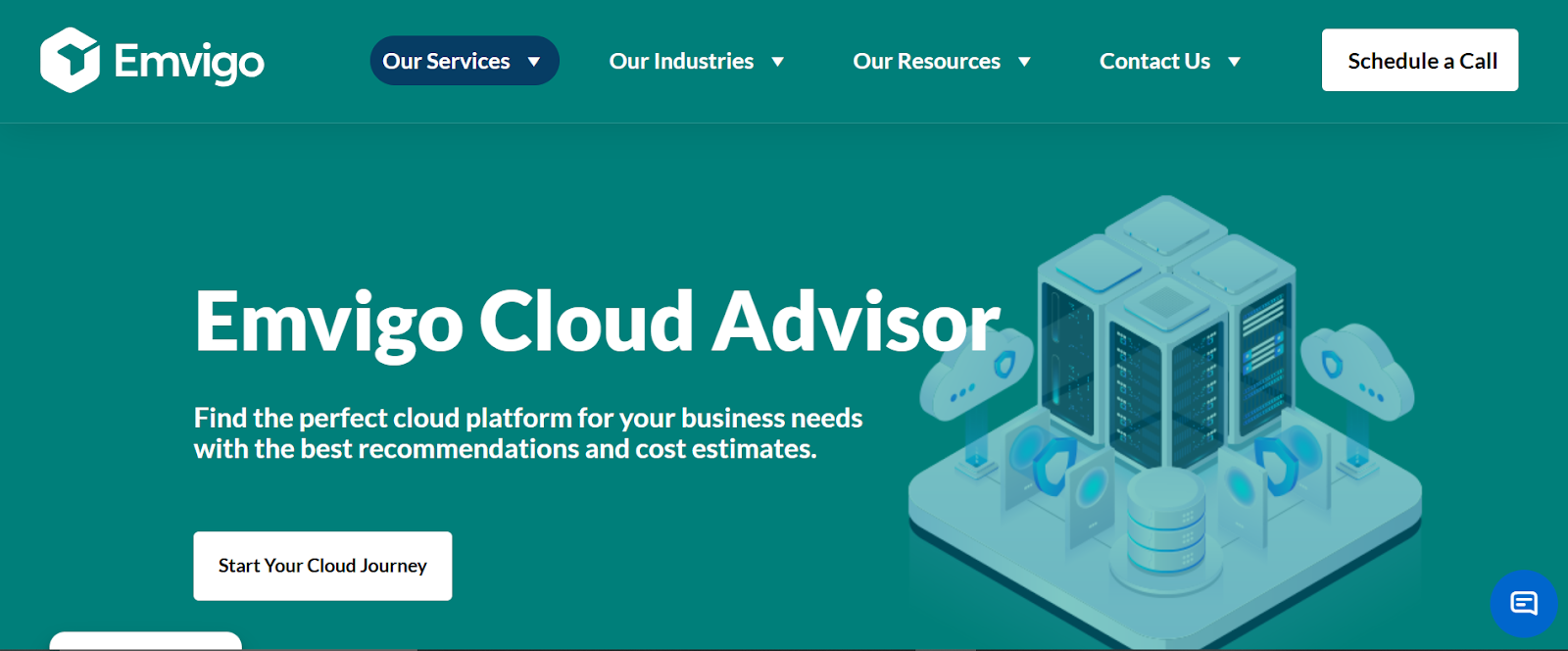
Emvigo stands out as a UK-based software development company that takes a refreshingly practical approach to cloud migration. Emvigo helps businesses migrate to the cloud with a clear, practical approach that puts your needs first. We begin by assessing your current systems, workflows, and objectives to create a migration plan that fits your business perfectly. Every step — from moving data to setting up applications in the cloud — is carefully managed to ensure minimal disruption, strong security, and optimal performance.
Emvigo isn’t just another service provider. They focus on aligning migration strategy with business goals, ensuring your move is secure, efficient, and scalable. Unlike larger players that offer cookie-cutter solutions, Emvigo works with teams to prioritise what matters most—minimising downtime, optimising workloads, and delivering measurable results.
For enterprises comparing options like IBM competitors, Accenture alternatives, or other cloud migration services companies, Emvigo offers a lean, outcome-driven approach. It’s the choice for organisations that want reliable execution without unnecessary complexity, turning cloud migration from a risk into a strategic advantage.
With Emvigo, your cloud environment becomes scalable, reliable, and ready to support growth, while removing the usual complexity and challenges of cloud migration.
What sets Emvigo apart:
-
- Strategic planning focus: We don’t just move your workloads—we help you understand why you’re migrating and build a roadmap that supports your long-term business goals. Their approach to cloud migration planning considers timelines, costs, and tool selection comprehensively.
- Architecture-first mindset: Emvigo employs Well-Architected Framework reviews to ensure your cloud environment isn’t just functional but optimised for performance, security, cost, and reliability from day one.
- Personalised advisory services: Through Emvigo Cloud Advisor, we provide ongoing infrastructure decision support—not just during migration, but as your needs evolve.
Why Emvigo outperforms larger competitors:
Affordability without compromise. Unlike enterprise consultancies that charge premium rates for brand recognition, Emvigo delivers exceptional value through lean operations and focused expertise. You’re paying for skilled engineers and strategic thinking, not layers of account management overhead. Schedule a free call today with Emvigo to see how affordable, expert cloud migration can transform your business.
On-time delivery as standard. Emvigo’s track record speaks clearly—they deliver migrations within agreed timelines consistently. Their project management approach breaks migrations into clear milestones with realistic buffers built in, avoiding the scope creep and deadline extensions that plague larger consultancies.
Each phase has defined deliverables and exit criteria, ensuring you always know exactly where you stand. This predictability helps your business plan resources, communications, and go-live activities with confidence.
Post-launch care that actually cares. The relationship doesn’t end at migration completion. Emvigo provides genuine post-migration support that extends beyond basic helpdesk services. We monitor your environment proactively, identifying optimisation opportunities before they become problems.
Agile responsiveness. Where large firms require committee approvals and formal change requests, Emvigo adapts quickly to shifting requirements. If business priorities change mid-migration, they pivot without contractual battles or expensive change orders.
This agility particularly benefits growing businesses where requirements evolve rapidly. You’re working with decision-makers directly, not navigating corporate hierarchies.
Best for: Small and Mid-sized businesses and enterprises looking for a partner who prioritises strategic alignment over rapid deployment. Particularly strong for companies needing ongoing architectural guidance beyond the initial migration, delivered through a relationship-based model rather than transactional engagements.
AWS (Amazon Web Services)
AWS isn’t just a cloud provider—they offer comprehensive migration services through AWS Professional Services and a vast partner network spanning thousands of certified consultancies worldwide.
Their migration ecosystem has matured significantly, with purpose-built tools and proven methodologies refined across millions of workload migrations. AWS’s experience spans virtually every industry, application type, and complexity level imaginable.
What AWS brings to the table:
-
- Migration acceleration programmes: AWS provides financial incentives and technical resources through MAP (Migration Acceleration Program), which can offset migration costs significantly. Eligible customers receive funding for assessment, planning, and implementation phases, sometimes covering 25-50% of migration expenses.
- Purpose-built migration tools: Services like AWS Migration Hub, Database Migration Service, and Application Migration Service are designed specifically for their platform, ensuring smooth transitions. AWS Application Discovery Service automatically inventories on-premises infrastructure, mapping dependencies that might otherwise be overlooked.
-
- Extensive documentation: AWS offers detailed migration playbooks, whitepapers, and best practice guides for virtually every scenario. Their prescriptive guidance covers specific application types (SAP, Oracle, Microsoft), industries (healthcare, financial services), and compliance frameworks (HIPAA, PCI-DSS).
-
- Global infrastructure: With 32 geographic regions and 102 availability zones globally as of 2024, AWS provides unmatched reach for businesses with international operations. Their network backbone ensures low-latency connections between regions and robust disaster recovery options.
Best for: Large enterprises with complex, multi-region requirements or businesses already invested in the AWS ecosystem. Particularly strong for organisations needing cutting-edge services like machine learning, IoT, or advanced analytics integrated into their migration strategy.
Google Cloud Platform
Google Cloud has rapidly evolved from an infrastructure provider to a full-service cloud migration partner, particularly strong in data analytics and machine learning integrations.
Their approach reflects Google’s internal practices—the same technologies powering Google Search, YouTube, and Gmail are available to enterprise customers. This production-proven infrastructure provides confidence in scalability and reliability.
Google’s engineering culture emphasises automation, which translates to migration tools and services that reduce manual intervention and human error. Their Site Reliability Engineering (SRE) principles, developed through managing massive-scale services, inform their migration methodologies.
Google Cloud’s strengths:
-
- Data and analytics excellence: BigQuery and Google’s data pipeline tools make GCP particularly attractive for data-intensive migrations where analytics are central to business operations. BigQuery’s serverless architecture eliminates infrastructure management whilst handling petabyte-scale datasets with SQL queries.
-
- Kubernetes-native approach: As the birthplace of Kubernetes, GCP excels at containerised workload migrations and modern application architectures. Google Kubernetes Engine (GKE) provides managed Kubernetes with automatic upgrades, security patches, and integration with Google Cloud services.
-
- Competitive pricing: Google Cloud often undercuts AWS and Azure on compute and storage costs, with sustained use discounts applied automatically without upfront commitments. Their pricing transparency and simplified discount structure make cost forecasting more straightforward than competitors.
-
- Strong sustainability credentials: Google matches 100% of its cloud operations with renewable energy, appealing to organisations with environmental commitments. They’ve been carbon neutral since 2007 and achieved 100% renewable energy matching for global operations since 2017.
Best for: Companies prioritising data analytics, AI/ML capabilities, or containerised applications. Also ideal for businesses focused on environmental sustainability or requiring strong API-first, developer-friendly platforms. Particularly compelling for organisations modernising legacy monolithic applications into cloud-native architectures.
Wipro
Wipro brings decades of IT services experience to cloud migration, offering end-to-end transformation services that extend beyond pure infrastructure moves.
As one of India’s leading IT services companies with global delivery capabilities, Wipro combines technical expertise with deep industry knowledge accumulated across thousands of client engagements. Their migration practice has evolved from early virtualisation projects through contemporary multi-cloud and hybrid strategies.
Wipro’s approach:
-
- Industry vertical expertise: Wipro has dedicated practices for banking, healthcare, retail, and manufacturing, bringing sector-specific compliance knowledge to migrations. Their banking practice understands PCI-DSS requirements intimately, whilst healthcare teams navigate HIPAA complexities.
-
- Boundaryless Data Centre programme: Their proprietary migration framework focuses on hybrid and multi-cloud strategies, not just single-cloud lifts. This approach acknowledges that many enterprises will maintain on-premises infrastructure alongside cloud resources indefinitely, requiring thoughtful workload placement decisions.
-
- Change management integration: Wipro recognises that cloud migration is as much about people as technology, incorporating training and cultural transformation into their engagements. Their change management practice works alongside technical teams, ensuring stakeholders understand upcoming changes, addressing resistance, and building internal cloud champions.
Best for: Large enterprises in regulated industries requiring comprehensive transformation programmes that address technology, processes, and organisational change simultaneously. Particularly valuable for organisations with complex legacy environments requiring careful compliance navigation during cloud transitions.
Deloitte
Deloitte approaches cloud migration through a business transformation lens, integrating technology changes with strategic consulting expertise honed across decades serving Fortune 500 companies.
As part of the “Big Four” professional services firms, Deloitte brings unparalleled access to C-suite executives and boards, positioning cloud migration as strategic business enablement rather than IT infrastructure projects. Their multi-disciplinary model combines cloud architects with management consultants, financial advisors, and industry specialists.
This integrated approach proves particularly valuable for migrations tied to broader transformation initiatives—mergers and acquisitions, digital transformation programmes, regulatory compliance upgrades, or business model pivots. Deloitte connects cloud strategy to these wider business contexts naturally.
Deloitte’s differentiators:
-
- Business case development: Deloitte excels at building compelling financial models that justify migration investments to boards and stakeholders. Their financial modelling capabilities quantify both direct benefits (infrastructure cost reduction, licensing optimisation) and indirect advantages (faster time-to-market, improved customer experience, enhanced business agility).
-
- Risk and compliance expertise: Their audit and regulatory background makes them particularly valuable for migrations in highly regulated sectors like financial services and healthcare. Deloitte’s risk advisory practice conducts comprehensive compliance assessments before migration, identifying regulatory requirements and designing cloud architectures that satisfy them.
-
- Multi-cloud strategy: Rather than favouring a single platform, Deloitte helps organisations develop vendor-agnostic strategies that prevent lock-in. Their cloud strategy methodology evaluates workloads against multiple cloud providers’ capabilities, recommending optimal placement decisions based on technical fit, cost, and strategic considerations.
-
- Executive-level engagement: Deloitte operates comfortably at C-suite level, aligning cloud strategy with broader business transformation initiatives. Their consultants regularly present to boards of directors, explaining technical strategies in business terms and securing executive sponsorship critical for transformation success.
Best for: Enterprises requiring board-level business case development, regulatory compliance expertise, or integration of cloud migration into wider transformation programmes. Particularly strong for organisations where cloud migration intersects with M&A activity, major compliance initiatives, or fundamental business model changes requiring strategic guidance beyond technical implementation.
Microsoft Azure
Microsoft Azure offers seamless integration for organisations already invested in the Microsoft ecosystem, with migration services that leverage existing relationships and licensing arrangements.
Azure’s evolution reflects Microsoft’s transformation from traditional software vendor to cloud-first company. Their migration services benefit from this journey—Microsoft understands enterprise IT challenges intimately through decades serving corporate customers, translating into migration tools and services designed around real-world enterprise constraints.
Azure’s advantages:
-
- Windows workload expertise: Unsurprisingly, Azure handles Windows Server, SQL Server, and .NET application migrations better than any competitor, often with licensing incentives that significantly reduce migration costs. Their Azure Hybrid Benefit allows organisations to use existing Windows Server and SQL Server licences in Azure, dramatically reducing compute costs.
-
- Hybrid cloud leadership: Azure Arc and Azure Stack enable true hybrid deployments, allowing gradual migrations rather than all-or-nothing approaches. Azure Arc extends Azure management and services to any infrastructure—on-premises servers, other clouds, or edge locations—through a unified control plane.
-
- Enterprise agreement integration: For organisations with existing Microsoft Enterprise Agreements, Azure migration can be financially advantageous with bundled licensing and services. Microsoft often includes Azure credits within EA renewals, providing funding for migration projects or reducing initial cloud spend.
-
- Azure Migrate toolset: Comprehensive assessment and migration tools that discover dependencies, right-size resources, and track migration progress. Azure Migrate provides a unified hub for discovery, assessment, and migration across various workload types—servers, databases, web applications, virtual desktops.
Best for: Organisations heavily invested in Microsoft technologies, needing hybrid cloud capabilities, or requiring tight integration with Microsoft 365 and Dynamics platforms. Particularly compelling for enterprises with substantial Windows Server and SQL Server footprints where licensing economics strongly favour Azure placement.
IBM Cloud
IBM Cloud brings enterprise-grade reliability and a particular strength in mainframe and legacy system modernisation to cloud migration conversations.
IBM’s century-long history in enterprise computing translates into a deep understanding of complex, mission-critical IT environments that underpin major corporations. Their migration services reflect this legacy—thoughtful, risk-averse approaches prioritising stability and continuity over rapid transformation.
For organisations running IBM hardware, middleware, or software, IBM Cloud offers natural migration paths with vendor support throughout. This integration extends beyond simple compatibility to include migration tooling, licensing flexibility, and architectural guidance leveraging IBM’s intimate product knowledge.
IBM’s unique offerings:
- Mainframe expertise: IBM remains unmatched for organisations migrating or modernising mainframe workloads, offering unique pathways to cloud whilst preserving mission-critical systems. Their Wazi as a Service enables mainframe application development and testing in cloud environments, allowing modernisation without touching production mainframes.
- Quantum-ready infrastructure: For organisations planning for future quantum computing integration, IBM provides a unique migration pathway. Their IBM Quantum services offer access to quantum systems via cloud, allowing experimentation and algorithm development today.
- Industry-specific cloud platforms: IBM builds vertical-specific cloud platforms combining infrastructure with industry-tailored services. IBM Cloud for Financial Services, for example, provides pre-configured compliance controls meeting banking regulatory requirements. These industry clouds accelerate migrations by addressing sector-specific challenges comprehensively.
Best for: Large enterprises with legacy mainframe systems, organisations requiring bare metal cloud infrastructure, or businesses planning for quantum computing integration. Particularly strong for IBM technology-heavy environments where vendor continuity simplifies migration complexity and for organisations in highly regulated industries benefiting from IBM’s compliance frameworks.
Common Cloud Migration Mistakes to Avoid
Even with a capable partner, awareness of common pitfalls helps ensure success.
Underestimating complexity. Many organisations assume cloud migration is simply “moving servers,” overlooking application dependencies, data relationships, and integration points that become apparent only mid-migration.
Skipping the discovery phase. Rushing into migration without thorough assessment leads to surprise costs, extended timelines, and suboptimal architecture decisions.
Neglecting team training. Your internal teams need to manage and optimise cloud infrastructure post-migration. Partners should include knowledge transfer, not just implementation.
Ignoring cost optimisation. Initial migrations often result in overprovisioned resources. Without ongoing optimisation, cloud costs can quickly exceed on-premises expenses.
Treating migration as purely technical. Successful cloud adoption requires organisational change, new processes, and cultural shifts that purely technical migrations don’t address.
Investment Considerations
Cloud migration costs vary dramatically based on scope, complexity, and current infrastructure.
Typical cost components include:
-
- Assessment and planning services
- Migration tooling and software licences
- Professional services and implementation
- Training and knowledge transfer
- Temporary dual-running costs during migration
- Post -migration optimisation and support
Budget expectations for UK businesses: Small to mid-sized organisations (50-100 workloads) should anticipate migration service costs between £75,000-£250,000, whilst larger enterprises with complex environments may invest £500,000-£2 million or more.
These figures cover professional services, tooling, and implementation but exclude ongoing cloud infrastructure costs themselves.
Emvigo’s transparent approach to cloud migration planning and costs helps UK businesses understand these investments realistically before committing.
Financial incentives can offset costs. AWS MAP, Google Cloud’s Adoption Programme, and Microsoft’s Azure Migration Programme all offer credits, funding, or cost-sharing for qualified migrations.
These vendor programmes often require working with certified partners who understand programme requirements and funding application processes. Emvigo helps clients navigate these opportunities, maximising available financial support.
Key insight: “The right cloud migration partner doesn’t sell you their standard package—they build a custom strategy that acknowledges your unique starting point, constraints, and ambitions.”
Post-Migration: Setting Up for Long-Term Success
Migration completion isn’t the finish line—it’s the starting line for cloud optimisation. Establish cloud governance early. Define policies for resource provisioning, access management, cost controls, and architectural standards before sprawl becomes unmanageable.
Cloud governance frameworks should address:
-
- Tagging standards for cost allocation and resource tracking
- Approval workflows for new resource provisioning
- Security baseline requirements for all workloads
- Network access policies and segmentation rules
- Data classification and handling procedures
- Backup and disaster recovery requirements
Without governance, cloud environments quickly become chaotic, resources consuming budget, inconsistent security postures creating vulnerabilities, and architectural drift complicating management.
Implement continuous optimisation. Cloud environments drift over time. Regular reviews identify unused resources, right-sizing opportunities, and architectural improvements.
Monthly optimisation reviews should examine:
-
- Compute resources running at low utilisation (candidates for downsizing)
- Storage volumes attached to terminated instances
- Unattached elastic IPs or load balancers consuming costs
- Reserved Instance or Savings Plan coverage gaps
- Database instances that could migrate to serverless options
- Archive candidates in hot storage tiers
These reviews typically identify 15-30% cost reduction opportunities in the first year post-migration. Emvigo’s post-launch support includes proactive optimisation recommendations, ensuring your cloud investment delivers sustained value. Partner with Emvigo to turn your cloud investment into a long-term performance advantage. Get in touch
Build internal cloud expertise. While partners provide initial implementation, sustainable success requires internal teams who understand cloud-native architectures, cost management, and operational best practices.
Develop internal capabilities through:
-
- Structured training programmes targeting different roles (architects, engineers, operations)
- Cloud certification paths with employer support (AWS Certified Solutions Architect, Azure Administrator)
- Internal knowledge sharing—regular architecture reviews, lessons learned sessions
- Hands-on experience through non-production environments where teams experiment safely
- External community engagement—cloud user groups, conferences, online forums
The strongest cloud teams blend vendor-specific expertise with cloud-agnostic principles, avoiding lock-in whilst leveraging platform-specific capabilities where valuable.
Measure business outcomes, not just technical metrics. Track how migration impacts revenue, customer experience, development velocity, and strategic initiatives—not just infrastructure performance.
Meaningful post-migration metrics include:
-
- Application deployment frequency (measure improved agility)
- Time from code commit to production (DevOps velocity)
- Infrastructure costs as percentage of revenue (efficiency trends)
- Application availability and performance (user experience)
- Security incident frequency and resolution time
- New feature release velocity
- Developer satisfaction scores (internal stakeholder value)
These business-aligned metrics demonstrate cloud value to executives far more effectively than technical infrastructure metrics alone.
Plan for continuous evolution. Cloud providers release hundreds of new services and features annually. Your post-migration architecture shouldn’t be static but evolve as capabilities mature and business needs change.
Quarterly architecture reviews assess opportunities to adopt new services that improve performance, reduce costs, or enable new capabilities. Serverless databases, improved machine learning services, or enhanced security tools might offer compelling upgrades months after initial migration.
Ready to start your cloud migration journey with a partner who prioritises your business outcomes? Get in touch with our team to discuss your specific requirements and build a strategy that works for your organisation.
Frequently Asked Questions
How long does a typical cloud migration take?
Most mid-sized enterprises complete migration in 12–18 months. Simple lift-and-shift can take 3–6 months, while full refactoring may extend to 24 months or more.
What’s the difference between lift-and-shift and refactoring?
Lift-and-shift moves apps with minimal changes for speed. Refactoring redesigns apps for cloud-native benefits like scalability and performance, but takes longer.
How much does cloud migration cost?
Costs usually range 15–30% of first-year cloud expenses. For 50–100 workloads, mid-sized UK firms may spend £100k–£500k, excluding ongoing cloud costs.
Do we need to shut down systems during migration?
Not usually. Techniques like staged cutovers and parallel running allow near-zero downtime, though some legacy systems may need brief maintenance windows.
How do we maintain security during and after migration?
Use encryption, access controls, network isolation, and monitoring. Post-migration, cloud-native security tools keep environments protected.
Which cloud provider is best for UK businesses?
It depends on your needs: AWS for breadth, Azure for Microsoft integration, Google Cloud for analytics. Multi-cloud strategies often provide the best fit.
Making Your Decision
Choosing amongst the best cloud migration companies ultimately depends on aligning their strengths with your specific needs, industry context, and organisational culture.
Emvigo’s focused approach and transparent communication style offer particular value. Our emphasis on Well-Architected principles ensures your migration builds a foundation for long-term success, not just quick infrastructure moves.
The combination of affordability, on-time delivery consistency, and genuine post-launch care distinguishes Emvigo from competitors who prioritise transaction volume over relationship depth. Schedule a free call today to see how Emvigo can help your business succeed in the cloud.
The cloud migration landscape will continue evolving throughout 2025 and beyond, but the fundamental principle remains constant: the right partner builds infrastructure whilst enabling business growth, not just moving servers.
Cloud migration represents one of the most significant technology decisions your organisation will make this decade. Choose partners who demonstrate genuine understanding of your business context, communicate transparently throughout the journey, and commit to your long-term success beyond initial implementation.