
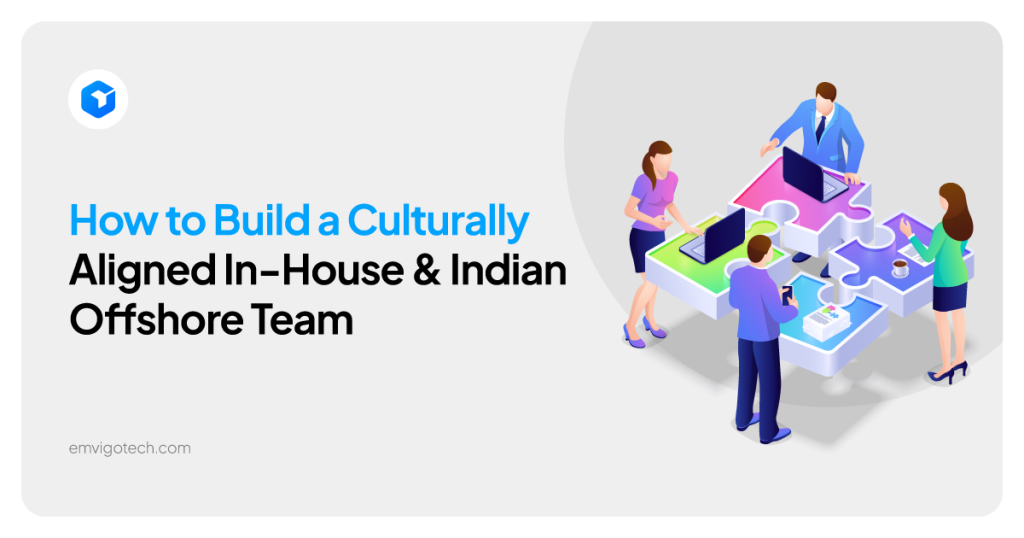
Building a Culturally Aligned In-House & Indian Offshore Team isn’t just about connecting video calls across continents—it’s about creating a unified workforce that shares values, communication styles, and collective goals. As UK companies increasingly tap into India’s remarkable talent pool of over 5 million tech professionals, the challenge isn’t finding skilled developers; it’s ensuring your Bengaluru-based engineers feel as integrated into your company culture as your London-based product managers. When done right, building culturally aligned ODC transforms geographical distance into a strategic advantage.
Why Cultural Alignment Matters More Than Ever
Let’s start with something surprising: according to McKinsey research, companies with executive teams in the top quartile for ethnic and cultural diversity are 33% more likely to achieve industry-leading profitability. Yet, a PwC Global CEO Survey revealed that whilst 89% of CEOs cited effective cross-cultural team management as “important” or “very important”, only 15% reported being “very satisfied” with their capabilities in this area.
That gap? That’s where most UK businesses struggle when working with Indian offshore teams.
The stakes are high. Research shows that culturally diverse teams outperform non-diverse teams by 35%—but only when properly managed. Without intentional cultural integration strategies, you risk miscommunication, decreased productivity, and high turnover rates that negate any cost savings from offshoring.
Understanding the Cultural Landscape: UK Meets India
Before we dive into solutions, let’s acknowledge the elephant in the Zoom room: UK and Indian work cultures differ significantly. According to the UK India Business Council, these differences manifest in several key areas:
Communication Styles
British workplace communication tends to be direct, straightforward, and task-focused. Indians often employ high-context communication, where meaning is conveyed through nuance, non-verbal cues, and what’s left unsaid.
One crucial example: saying “no” directly can be considered offensive in Indian business culture. Instead, you might hear phrases like “we’ll see,” “it may be difficult,” or “I will try”—which often mean “no.” Research indicates that 32% of cross-cultural team conflicts stem from such communication misunderstandings.
Hierarchy and Decision-Making
Indian businesses typically operate with well-defined hierarchical structures, where decisions are made at senior levels and roles are clearly delineated. UK workplaces, whilst respecting hierarchy, generally embrace flatter organisational structures with more distributed decision-making.
This difference became painfully clear in one documented case where an American manager told his Indian team their code “needed improvement”—intended as mild feedback. The Indian developers, accustomed to carefully cushioned negative feedback, interpreted this as severe criticism, leading to unnecessary stress and even a resignation. The company later implemented communication training that reduced such misunderstandings by 60%.
Trust Building Approaches
The UK operates on task-based trust—if you deliver quality work on time, you’re reliable. India emphasises relationship-based trust, built through personal connections, shared meals, and understanding one another as people first, colleagues second.
Seven Strategic Pillars for Building Culturally Aligned Teams
1. Invest in Comprehensive Cultural Intelligence Training
Don’t just send a one-page PDF about Indian holidays and call it cultural training. Effective cross-cultural team management requires proper investment.
Start with cultural intelligence (CQ) training for both sides. Your UK team needs to understand Indian communication norms, decision-making preferences, and workplace expectations. Simultaneously, your Indian team needs insight into British directness, flat organisational thinking, and time management expectations.
Studies show that teams with higher cultural intelligence demonstrate more effective communication, better conflict management, and stronger trust-building. Consider implementing:
-
- Initial immersion sessions covering Hofstede’s cultural dimensions, communication styles, and workplace norms
- Ongoing micro-learning through short weekly cultural insights
- Cross-cultural mentorship programmes pairing UK and Indian team members
- Real-world scenario training addressing common friction points
2. Create Crystal-Clear Communication Protocols
Remember that 62% of virtual teams comprise workers from three or more cultures, yet only 15% of team leaders have successfully led cross-cultural remote teams.
Establish explicit communication guidelines that account for cultural differences:
Clarity Over Assumption: Avoid idioms, colloquialisms, and British humour in professional communications. What you consider harmless banter might confuse or offend. The Open University notes that even with strong English proficiency, jargon and regional accents can hamper communication between UK and Indian teams.
Feedback Frameworks: Create structured feedback mechanisms that work across cultures. Rather than ambiguous statements like “this needs work,” use specific, constructive language: “The function works well, but we need to refactor the authentication method to meet our security standards by Friday.”
Asynchronous Communication Norms: With time zones spanning several hours, establish clear expectations about response times. Define what constitutes “urgent” and create documentation habits that allow work to continue across time zones.
Meeting Etiquette: Document your meeting culture—when should cameras be on? Is it acceptable to multitask? How do you signal you’d like to speak? These seemingly minor details significantly impact how included offshore team members feel.
3. Build Relationship Infrastructure From Day One
Indians place tremendous value on personal relationships at work. According to research on business culture in India, establishing personal connections is often a prerequisite for successful professional interactions.
Implement structured relationship-building activities:
Virtual Coffee Roulette: Pair team members from UK and India for 15-minute casual video chats fortnightly. Provide conversation starters that go beyond work: “What’s something you’ve learned recently?” or “What traditions from your hometown do you miss?”
Team Rituals: Create shared experiences that transcend location. This might include:
-
- Weekly “show and tell” sessions where team members share something from their workspace
- Monthly cultural spotlight where someone shares their traditions, festivals, or regional customs
- Quarterly virtual team meals where everyone orders local cuisine and eats together online
Want Your Offshore Team to Feel In-House?
In-Person Meetups: If budget allows, facilitate annual or bi-annual in-person gatherings. Companies investing in physical meetups report significantly stronger long-term cohesion.
4. Redesign Your Onboarding for Cultural Context
Standard onboarding programmes often fail cross-cultural teams. The Open University research found that teams split between Mumbai and London faced immediate communication challenges due to differing formality expectations.
Your offshore team’s onboarding should include:
Cultural Buddy System: Assign each new Indian team member a UK “cultural buddy” (and vice versa) for their first 90 days. This person answers questions like “Is it rude to ask about timelines?” or “How direct should I be in this email?”
Explicit Norm Documentation: Create a living document outlining your company’s unwritten rules. How do you celebrate wins? What does “end of day” mean? When is Slack appropriate vs. email?
Two-Way Street Approach: Have your Indian team lead sessions teaching UK colleagues about their work style, festivals, and communication preferences. This signals genuine cultural exchange, not one-way assimilation.
5. Embrace Flexible Leadership Approaches
Indian professionals generally expect clear guidance, structure, and visible leadership, according to recent analysis. Leaders who rely solely on facilitation rather than direction may be perceived as unclear or disengaged.
However, the Indian workforce is evolving. Many young professionals have studied abroad or worked with international teams, bringing more Western communication styles.
The solution? Adaptive leadership:
-
- Provide More Structure Initially: Give clear directions, defined outcomes, and regular check-ins when starting projects
- Gradually Increase Autonomy: As relationships strengthen and trust builds, shift toward more collaborative decision-making
- Maintain Visibility: Regular one-on-ones and team meetings matter more with distributed teams
- Be Explicit About Expectations: Don’t assume your Indian team will challenge your ideas or push back on unrealistic deadlines unless you explicitly invite this behaviour
6. Celebrate Diversity Intentionally
According to research, 89% of white-collar workers are now part of global virtual teams. Successful companies don’t just accommodate diversity—they celebrate it as a competitive advantage.
Shared Calendar of Cultural Events: Create a team calendar highlighting festivals and holidays from both cultures—Diwali and Holi alongside Christmas and Easter. Encourage team members to share how they celebrate.
Recognition That Resonates: What motivates employees varies across cultures. Some team members may prefer public recognition and awards, whilst others value private acknowledgement or additional learning opportunities.
Inclusive Decision-Making: When planning team activities, gatherings, or initiatives, involve representatives from both locations in planning. This prevents the common pitfall of UK teams planning activities at times impossible for Indian colleagues.
7. Leverage Technology Thoughtfully
The right tools can bridge geographical gaps, but technology alone won’t create cultural alignment.
Collaboration Platforms: Tools like Slack, Microsoft Teams, or Notion can create digital water cooler moments—but only if you deliberately foster casual communication channels alongside work-focused ones.
Project Management Transparency: Use platforms like Jira, Asana, or Monday.com to create visibility across teams. When everyone can see progress, priorities, and blockers, you reduce the “us vs. them” mentality.
Virtual Team Building: Don’t overlook online engagement activities. Research shows that companies implementing regular virtual team building saw 40% reduction in misunderstandings and 15% increase in project delivery speed.
Consider activities like virtual scavenger hunts, online trivia competitions, or shared skill-building workshops that bring both teams together in non-work contexts.
Measuring Success: Beyond Productivity Metrics
How do you know if your cultural alignment efforts are working? Look beyond traditional KPIs:
Engagement Indicators: Survey both teams quarterly about feeling valued, understood, and included. Anonymous feedback reveals friction points you might miss.
Communication Quality: Track how often misunderstandings occur, how quickly issues get resolved, and whether team members feel comfortable asking questions.
Voluntary Collaboration: Are team members across locations choosing to work together on projects, or do they stay siloed by geography?
Retention Rates: High turnover in your offshore team often signals cultural misalignment more than compensation issues.
The Reality Check: This Takes Time and Commitment
Let’s be honest: building culturally aligned offshore teams isn’t quick or effortless. Research from ResearchGate indicates that 83% of organisations increased reliance on cross-cultural virtual teams during the pandemic, with 67% expecting these arrangements to continue indefinitely.
You’re not just hiring developers in Bengaluru—you’re creating a unified organisation that happens to span two continents. This requires genuine commitment from leadership, consistent resource allocation, and patience as both teams learn to work together effectively.
But the payoff is substantial. Companies that successfully manage Indian offshore team cultural integration report cost savings of 40-65% compared to in-house UK teams, whilst accessing a talent pool that produces over 1.5 million engineers annually.
Why Businesses Trust Emvigo as Their Offshore Development Team
-
- ISO 9001:2015 Certified – Quality is built into everything we do. Our processes meet global standards, ensuring consistent delivery and reliability.
- Proven Cultural Integration – Our teams are trained in UK business practices and communication styles, making cross-border collaboration seamless.
- End-to-End Offshore Support – From development to deployment, our offshore developers act as a true extension of your in-house team.
- Agile and Transparent – We follow agile methodologies, maintain proactive communication, and provide full visibility into progress.
- Rapid Team Onboarding – Our cultural buddy system and structured onboarding allow your offshore team to integrate within 2–4 weeks.
- AI-Driven Development – Leveraging AI tools for coding, testing, and project management, we boost productivity and reduce errors.
- Trusted by Global Clients – Companies partner with us not just for cost efficiency, but for reliability, expertise, and strategic collaboration.
Extend Your In-House Team with Trusted Offshore Developers
Extend Your In-House Team with Trusted Offshore Developers
Partner with Emvigo today to create a culturally aligned, high-performing offshore team that complements your in-house operations seamlessly.
Schedule a Free Consultation with us Today
Moving Forward: Your Action Plan
Start small but start deliberately:
-
- This Week: Audit your current communication practices. Are there implicit expectations that haven’t been made explicit?
- This Month: Implement one structured relationship-building initiative—perhaps virtual coffee chats or a cultural exchange session.
- This Quarter: Invest in proper cultural intelligence training for both teams. Make it interactive, ongoing, and practical.
- This Year: Create measurable goals around cultural alignment and track progress through engagement surveys and retention metrics.
The companies thriving with Indian offshore teams aren’t those with the largest budgets or most sophisticated technology. They’re the ones that recognised early that effective cross-cultural team management India requires intentional strategy, consistent effort, and genuine respect for both cultures.
When you successfully harmonise your in-house and Indian offshore team culture, you don’t just save costs—you build a genuine competitive advantage that’s difficult for competitors to replicate. That’s the true value of building culturally aligned offshore teams.
FAQs: Culturally Aligned In-House & Indian Offshore Team
1. What does it mean to have a culturally aligned in-house and Indian offshore team?
A culturally aligned team shares values, communication styles, and work expectations across locations. It ensures smooth collaboration, reduces misunderstandings, and improves productivity between UK in-house teams and Indian offshore teams like Emvigo.
2. Why is cultural alignment important for UK companies working with Indian offshore teams?
Cultural alignment prevents miscommunication, enhances trust, and fosters collaboration. It ensures offshore developers feel integrated, motivated, and committed, which leads to higher retention and better project outcomes.
3. How can companies improve communication between in-house and Indian offshore teams?
Clear protocols, structured feedback, asynchronous communication norms, and regular virtual meetings help bridge cultural and time zone differences. Tools like Slack, Teams, or project management platforms enhance visibility and transparency.
4. What strategies help build trust between UK in-house teams and Indian offshore teams?
Relationship-building initiatives, cultural exchange sessions, virtual coffee chats, and mentoring programs help establish personal connections. Celebrating festivals and acknowledging achievements across cultures strengthens trust and inclusion.
5.How does Emvigo ensure cultural alignment with in-house teams?
Emvigo is an end-to-end offshore development team using agile methods and AI-driven tools. By embedding cultural awareness, structured communication, and collaboration best practices, they integrate seamlessly with your in-house UK team for smooth project delivery.
6. How can companies measure the success of cultural alignment?
Track engagement surveys, retention rates, cross-team collaboration frequency, communication clarity, and project delivery speed. Regular feedback and cultural assessments ensure continuous improvement between in-house and Indian offshore teams.