

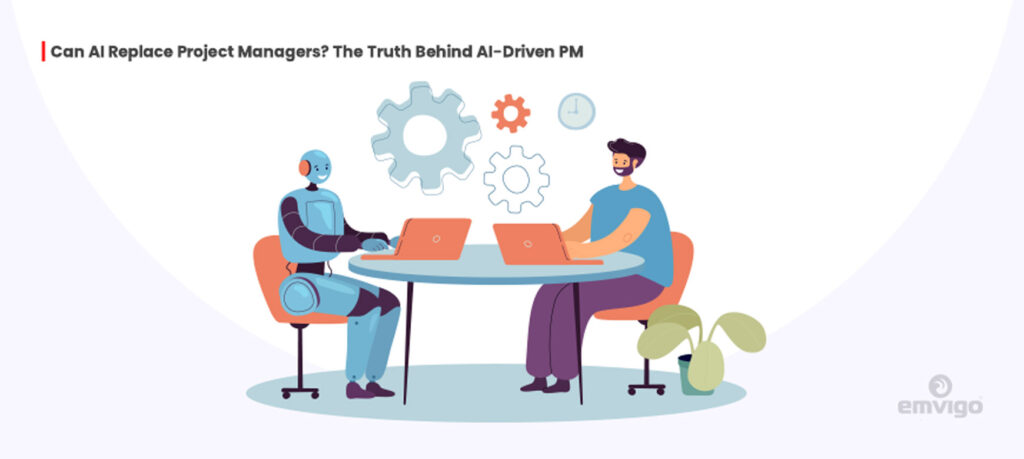
Managing projects can be stressful.
Deadlines are tight, teams are juggling multiple tasks, and unexpected issues constantly pop up. Project managers often find themselves buried in reports, chasing updates, and trying to predict risks—all while keeping stakeholders happy.
AI in project management promises to ease some of this burden. From automating repetitive tasks to analysing data and forecasting risks, AI can help managers save time, reduce errors, and make smarter decisions. But can it truly take over the role of a human project manager? Or is it just another tool to help managers work more efficiently?
In this guide, we will see the reality of AI in project management, what it can and cannot do, and how managers can leverage AI alongside their leadership skills to deliver projects more effectively.
Why AI is Transforming Project Management
Project management has always been challenging, but today’s environment makes it even more complex. Teams are expected to deliver projects faster, often with fewer resources, while stakeholders demand more transparency and accountability. Project managers face multiple pain points:
-
- Overloaded schedules: Managers spend hours on repetitive administrative tasks like updating spreadsheets, sending reminders, and tracking progress.
- Unpredictable risks: Delays, budget overruns, and sudden changes in client requirements can derail a project.
- Decision fatigue: With vast amounts of data to process—from budgets to team performance—making the right choice quickly is difficult.
- Communication bottlenecks: Coordinating between stakeholders, team members, and clients requires constant attention, leaving little time for strategic thinking.
AI in project management is transforming the way these challenges are addressed. Instead of replacing managers, AI acts as a powerful assistant, handling repetitive and data-driven tasks while providing actionable insights. Here’s how it’s reshaping the field:
1. Automation of Repetitive Tasks
Many project managers spend more time on administrative work than on leadership. AI project management software can:
-
- Automatically assign tasks based on team workload and skillsets.
- Generate progress reports without manual effort.
- Send reminders and alerts for upcoming deadlines.
Example: A project manager using AI tools like ClickUp AI or Asana AI can instantly redistribute tasks if a team member is overloaded, reducing delays and preventing burnout.
2. Enhanced Risk Prediction and Management
Artificial intelligence in project management excels at analysing historical data to identify risks before they escalate. AI can:
-
- Detect potential budget overruns early.
- Forecast delays in timelines and suggest corrective actions.
- Identify resource bottlenecks and suggest reallocations.
Example: AI predicts that a key task may take longer than expected based on past project data. The project manager can proactively adjust schedules and resources, avoiding last-minute crises.
3. Data-Driven Decision Support
AI in project management can process massive datasets instantly, providing insights that would take humans hours to compile. It can track:
-
- Team productivity and performance metrics
- Budget trends and resource utilisation
- Task dependencies and project milestones
While AI offers data-driven recommendations, human managers are still essential to interpret these insights within the context of team morale, company culture, and stakeholder expectations. “AI can process vast amounts of data to guide decision-making, allowing managers to focus on strategy and innovation, as highlighted in scalable software solutions
4. Improved Forecasting and Resource Allocation
AI helps managers plan more accurately by predicting resource needs and potential bottlenecks. This reduces wasted effort, ensures optimal team utilisation, and improves project delivery timelines.
Example: By analysing previous projects, AI suggests that additional testing resources are needed during a software rollout. The manager can plan ahead, avoiding delays and budget overruns.
5. Supporting Human Creativity and Strategy
AI doesn’t replace human intuition or leadership. Instead, it frees managers from repetitive tasks so they can focus on:
-
- Motivating and coaching their teams
- Communicating effectively with stakeholders
- Brainstorming solutions for complex problems
By handling routine tasks and providing timely insights, AI allows project managers to spend more time on high-value activities that truly influence project success.
6. Better Collaboration Across Teams
AI project management software can enhance team collaboration by:
-
- Tracking task progress and team workload in real-time
- Highlighting dependencies and potential conflicts
- Suggesting optimal task assignments based on skills
This ensures that teams are aligned, bottlenecks are reduced, and projects progress smoothly.
AI in project management is transforming the way projects are planned, executed, and delivered. It addresses common pain points such as administrative overload, risk management, and decision fatigue while supporting human managers in leadership, strategy, and innovation.
Rather than seeing AI as a replacement, forward-thinking managers view it as a partner that boosts efficiency, improves decision-making, and allows them to focus on what machines cannot do—lead people, inspire teams, and make critical judgments.
What AI Excels At in Project Management
AI in project management shines where tasks are repetitive, data-heavy, or time-consuming, allowing managers to focus on strategy, leadership, and team engagement. For starters, administrative work—updating spreadsheets, sending reminders, tracking progress—can be automated using AI project management software. These tools can assign tasks based on workload, generate real-time reports, and flag upcoming deadlines, reducing stress and saving hours each week.
Beyond administration, AI excels at risk management. By analysing historical project data, it can predict budget overruns, potential delays, and resource bottlenecks. This allows managers to act proactively, preventing small issues from turning into major crises. At the same time, AI provides data-driven decision support, quickly processing large volumes of information to offer insights on team productivity, budget trends, and task dependencies. While AI identifies patterns, human managers interpret them, factoring in team morale, company culture, and stakeholder expectations.
AI also improves forecasting and resource planning. It can anticipate workload peaks, recommend optimal resource allocation, and help managers prevent delays. This ensures that teams are fully utilised without being overburdened and that projects stay on track. Additionally, AI enhances team collaboration by offering real-time task updates, highlighting dependencies, and suggesting task assignments based on individual skills. Teams stay aligned, communication improves, and workflows become smoother.
In short, artificial intelligence in project management handles repetitive tasks, predicts risks, and provides actionable insights, allowing managers to dedicate more time to high-value activities such as leadership, strategy, and relationship-building. By combining AI efficiency with human judgment, project managers can deliver projects faster, smarter, and more effectively. Emvigo helps businesses integrate AI into project management, boosting efficiency and supporting leadership—Schedule a free consultation
Top AI Tools for Project Managers
With the rise of AI in project management, a variety of tools have emerged to help managers automate tasks, gain insights, and improve team collaboration. These tools are designed to reduce administrative overhead, improve decision-making, and make projects more efficient—all while complementing human leadership rather than replacing it.
1. Asana AI Work Management
Asana’s AI capabilities help automate task assignment, progress tracking, and reporting. Managers can quickly see which tasks are overdue, which team members are overloaded, and where bottlenecks might occur. The tool uses AI to suggest task priorities based on workload, project deadlines, and dependencies, making project planning faster and more accurate.
2. ClickUp AI
ClickUp integrates AI features for predictive analytics, risk management, and reporting. It can analyse past project data to identify potential delays or resource shortages. With ClickUp AI, managers can generate automatic summaries of project status, forecast timelines, and allocate resources more effectively. This helps reduce stress and ensures teams stay aligned.
3. Wrike AI Assistant
Wrike’s AI assistant focuses on monitoring project progress and providing actionable insights. It can flag potential risks, highlight workflow inefficiencies, and even suggest corrective actions. By using AI-driven suggestions, managers can prevent small issues from turning into major problems, allowing them to focus on leadership and stakeholder communication.
4. Notion AI
Notion AI is ideal for documentation, brainstorming, and knowledge management. It helps managers summarise meeting notes, track project decisions, and create structured plans. AI in project management through Notion enables teams to stay organised, maintain a single source of truth, and make data-driven decisions without spending hours manually documenting every step.
5. Trello AI
Trello’s AI features enhance workflow management by automating task prioritisation, identifying dependencies, and providing predictive insights on project timelines. Teams can visualise progress, spot potential risks early, and collaborate more effectively. Trello AI is especially useful for agile teams managing multiple parallel projects.
How to Use These Tools Effectively
The key to maximising AI in project management is combining AI tools with human insight. While AI automates repetitive tasks, predicts risks, and provides data-driven recommendations, managers must interpret insights, motivate teams, and make strategic decisions. Using AI tools for project managers can free up time, reduce errors, and allow them to focus on leadership and innovation.
Key Takeaways for Managers
-
- Automation: Let AI handle repetitive tasks like reporting, reminders, and scheduling.
- Risk Prediction: Use AI insights to anticipate delays, budget overruns, or resource issues.
- Decision Support: Leverage AI analytics for informed decision-making without losing human judgement.
- Collaboration: Keep teams aligned and projects transparent with AI-powered dashboards and real-time updates.
By adopting the right AI project management software, managers can streamline workflows, reduce administrative burden, and focus on the elements that truly drive project success—team engagement, strategy, and innovation.
Comparison Table: AI vs Human Strengths
While AI in project management handles data-driven and repetitive tasks efficiently, human project managers bring creativity, leadership, and empathy to the table. Understanding the strengths of both helps teams leverage AI effectively without losing the human touch.
| Aspect | AI Strengths | Human Strengths |
|---|---|---|
|
Speed
|
Processes large volumes of data instantly
|
Applies judgement and context to decisions
|
|
Decision-Making
|
Provides data-driven insights and predictions
|
Interprets insights, considers team dynamics, and uses intuition
|
|
Leadership
|
Executes tasks reliably and consistently
|
Motivates, inspires, and unites teams
|
|
Adaptability
|
Detects risks and predicts outcomes
|
Navigates unexpected changes and communicates adjustments effectively
|
|
Innovation
|
Analyses patterns and trends
|
Brainstorms, solves complex problems, and thinks creatively
|
|
Collaboration
|
Tracks tasks, dependencies, and progress automatically
|
Builds relationships, manages stakeholders, and resolves conflicts
|
|
Consistency
|
Performs repetitive tasks without fatigue
|
Maintains quality while managing complexity and uncertainty
|
What AI Cannot Replace
Leadership and team motivation are the most critical areas where human project managers outperform AI. While AI can handle tasks, track deadlines, and provide insights, it cannot inspire or guide a team. Here’s a detailed breakdown:
Leadership and Team Motivation
AI can assign tasks and track deadlines efficiently, but it cannot inspire, energise, or unite teams. Human project managers create a shared sense of purpose, encourage innovation, and maintain morale during challenging projects. While AI can assign tasks and track deadlines efficiently, it cannot inspire or guide teams; as seen in Generative AI in Software Development, AI works best as a support tool that enhances human leadership rather than replaces it.
Handling Uncertainty and Change
Projects rarely follow a fixed plan. Market conditions, client requirements, or unexpected challenges often shift suddenly. AI can highlight potential risks, but only humans can adapt strategies in real time, communicate changes effectively, and make nuanced judgment calls that balance risk, business goals, and team well-being.
Relationship-Building
Stakeholder management, client negotiations, and conflict resolution require emotional intelligence and trust. AI can generate reports or highlight issues, but it cannot build rapport, maintain long-term relationships, or handle delicate interpersonal situations.
Strategic Thinking and Innovation
AI provides data-driven recommendations, but it cannot think creatively, brainstorm new solutions, or align project decisions with broader business goals. Project managers contribute vision, context, and strategic oversight, ensuring projects deliver value beyond efficiency.
Empathy and Emotional Intelligence
AI lacks the ability to perceive team morale, motivation, or emotional cues. Understanding and responding to human emotions is critical for maintaining engagement, collaboration, and overall team productivity.
Key Takeaway: AI acts as a powerful assistant, but human leadership, empathy, strategic thinking, and creativity are irreplaceable. The most successful project management combines AI efficiency with human insight.
Future of AI in Project Management
The future of project management is not about AI replacing humans—it’s about human-AI collaboration. AI will continue to transform project management by taking over repetitive tasks, providing insights, and enabling faster decision-making. However, human project managers will remain critical for leadership, creativity, and strategic thinking.
Here’s a detailed look at how AI will shape project management in the coming years:
1. AI as a Strategic Assistant
AI will act as an intelligent assistant, helping project managers handle routine and data-heavy tasks:
-
- Automating scheduling, progress tracking, and reporting.
- Highlighting potential risks and dependencies in real-time.
- Providing predictive insights that guide resource allocation and decision-making.
This allows human managers to focus on high-value strategic tasks, team leadership, and problem-solving. AI is not a replacement but a powerful extension of human capabilities. Prepare your organisation for the future of project management with Emvigo’s AI-enabled solutions—schedule a strategy session today
2. Smarter Risk Management
Future AI systems will be even more advanced in predicting risks and spotting potential project roadblocks:
-
- AI can analyse historical project data to forecast delays, budget overruns, or resource constraints.
- Human managers use these insights to proactively mitigate risks and adjust strategies before issues escalate.
AI will act as a safety net, giving managers the information they need to make informed, timely decisions in uncertain environments.
3. Enhanced Collaboration and Communication
AI-driven dashboards and tools will improve visibility and communication across teams:
-
- Real-time updates on task progress, resource usage, and deadlines.
- Better transparency helps teams collaborate more effectively.
- Human managers still resolve conflicts, align team priorities, and maintain engagement, which AI cannot do.
The combination of AI tracking and human facilitation will make team coordination smoother and more efficient.
4. Integration of AI with Human Insight
The future will rely on a symbiotic relationship between AI insights and human judgement:
-
- AI provides data-driven recommendations, pattern recognition, and trend analysis.
- Human managers interpret these insights in the context of company culture, team dynamics, and business strategy.
- Managers make nuanced decisions that balance short-term efficiency with long-term goals.
This ensures AI is a tool for informed decision-making, not a replacement for leadership or intuition.
5. Driving Innovation
AI will free project managers from mundane tasks, giving them more time for creativity and problem-solving:
-
- Brainstorming innovative solutions.
- Experimenting with new approaches to project challenges.
- Ensuring that projects deliver meaningful value beyond just efficiency.
The human ability to innovate, adapt, and inspire will remain central to successful project management.
The Future is Human-AI Partnership
-
- AI will continue to revolutionise project management by automating tasks, providing predictive insights, and improving efficiency.
- Human managers will remain irreplaceable for leadership, strategic thinking, empathy, and innovation.
- The most successful project managers will integrate AI efficiency with human intelligence, leveraging technology to enhance team performance, decision-making, and project outcomes.
The projects of tomorrow will succeed when AI handles the data and routine tasks, while humans lead, innovate, and inspire. The future of project management is a collaborative partnership, not a replacement.
How Project Managers Can Use AI Effectively
AI is a powerful tool, but its true value lies in how project managers integrate it into their workflows. By automating routine tasks such as scheduling, progress tracking, report generation, and reminders, AI frees managers to focus on higher-level responsibilities like strategy, leadership, and innovation.
AI also provides data-driven insights, analysing project metrics, budget trends, productivity, and potential risks. Managers can interpret these insights to make informed, timely decisions. Predictive AI enhances risk management by identifying potential bottlenecks, budget overruns, and delays before they escalate, allowing managers to proactively adjust plans and allocate resources strategically. Start leveraging AI tools in your workflow with guidance from Emvigo—book your free consultation now
AI-driven dashboards improve project visibility and team collaboration. Managers can resolve conflicts, align team efforts, and maintain engagement without manually tracking every detail. However, while AI offers recommendations and forecasts, managers must combine these insights with human judgment, intuition, and experience to make final decisions, such as understanding dips in productivity or morale.
By delegating routine work to AI, managers gain more time to innovate, solve complex problems, and ensure projects align with long-term business goals. In short, AI enhances efficiency and supports decision-making, but human leadership, creativity, and strategic thinking remain essential for successful project management.
FAQs
What role does AI play in project management today?
AI helps automate scheduling, reporting, and risk prediction, freeing project managers to focus on leadership and strategy.
Can AI completely replace project managers?
No. AI enhances efficiency but lacks emotional intelligence and leadership—qualities essential to managing teams and stakeholders.
How can project managers use AI effectively?
By combining AI tools for automation with human insight, managers can make faster, smarter, and more empathetic decisions.
What are the common risks when implementing AI in project management?
Potential risks include over-reliance on AI, inaccurate predictions, and neglecting team dynamics or stakeholder communication.
Which tasks in project management are most suitable for AI automation?
Routine administrative tasks like task assignment, progress tracking, report generation, and reminders are ideal for AI automation.
What impact does AI have on project team roles?
AI transforms team roles by automating routine tasks—allowing members to move into more strategic, creative, and interpersonal work instead of just administrative duties.
What are the barriers to adopting AI in project management?
Common barriers include lack of clean data, resistance from team members, unclear use cases, and insufficient training to integrate AI tools effectively.
Will AI increase project management costs or reduce them?
In the short term, there may be costs in setup and training, but AI typically reduces costs long‑term by improving efficiency, preventing delays, and optimising resource use.
How secure is using AI in project management regarding data privacy?
Security depends on the AI tool and implementation—best practice is to ensure proper data governance, access controls and trust frameworks to protect project and team data.
Conclusion
AI is transforming project management by automating routine tasks, analysing data, and providing predictive insights. It helps project managers save time, make informed decisions, and streamline workflows. However, AI cannot replace the human qualities that drive project success—leadership, empathy, creativity, strategic thinking, and relationship-building remain essential.
The future of project management lies in human-AI collaboration. By leveraging AI as a supportive tool rather than a replacement, managers can focus on high-value work, inspire their teams, and drive innovation. Ultimately, the most successful projects will be those where AI handles the data and routine work, and humans lead, innovate, and connect with people.