

Project management can get confusing, especially when you’re trying to pick the right methodology for your team. Waterfall is one of the most traditional approaches—but what does it really mean for your projects? Here’s the quick version:
-
- Step-by-step process: Progress flows linearly from requirements to deployment.
- Best for clear projects: Works well when goals and scope are defined upfront.
- Structured phases: Requirements → Design → Development → Testing → Deployment → Maintenance.
- Predictable outcomes: Minimal changes make planning and deadlines easier.
- Good for documentation: Keeps everything organised and traceable.
What Is Waterfall Project Management?
Waterfall Project Management is a way to manage a project step by step, where each step must be finished before moving to the next one. Think of it like a waterfall—water flows from the top to the bottom in one direction.
The waterfall model follows a linear path from start to finish. Your team completes requirements gathering, then moves to design, followed by implementation, testing, and finally maintenance. Each phase has specific deliverables and review processes.
This methodology emerged in the 1970s from manufacturing and construction industries. Dr. Winston W. Royce first described this approach in 1970, though he never actually called it “waterfall.” The name came later as people recognised its cascading nature.
Unlike flexible approaches, the waterfall approach works best when requirements are clear from the beginning. You know exactly what you’re building and how to get there.
How Does the Waterfall Methodology Actually Work?
The waterfall project management methodology operates through distinct phases. Each stage builds upon the previous one, creating a structured pathway to project completion.
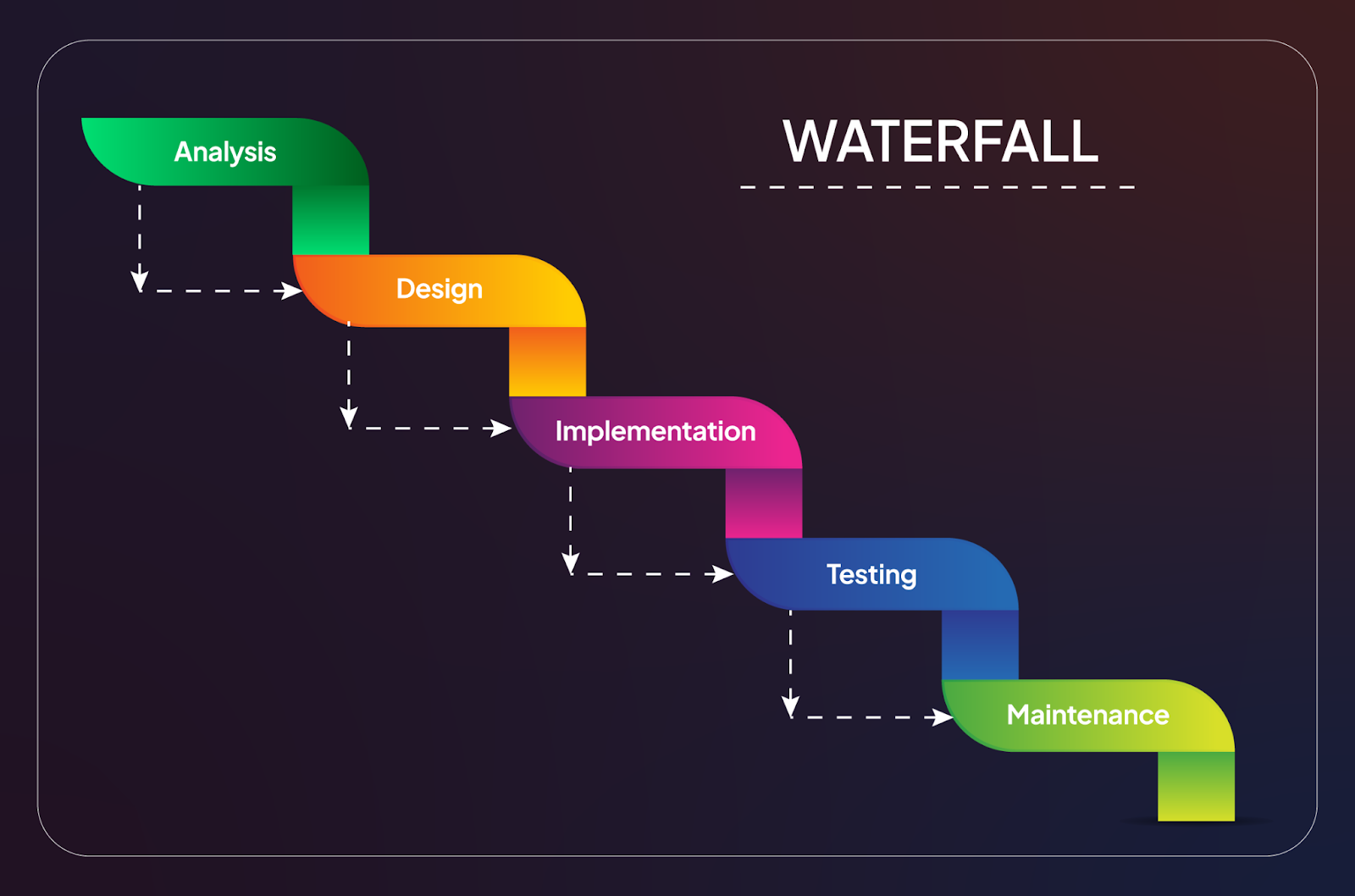
The Five Core Phases
Requirements Phase
The Requirement Phase is the first and most important step in a waterfall project. In this phase, you figure out exactly what the project needs to do before any designing or building starts.
Detailed documentation is crucial. You’ll create requirement specifications that everyone agrees upon. Changes after this point become expensive and time-consuming.
Why is the Requirement Phase important?
-
- It prevents misunderstandings later in the project.
- Make sure everyone is on the same page before moving forward.
- Forms the foundation for design, development, and testing.
- Helps estimate time, cost, and resources accurately.
Design Phase
The Design Phase is the second step in a waterfall project, right after the Requirement Phase. In this phase, you plan how to build what was defined earlier. Your team creates system architecture, user interface designs, and technical specifications. This blueprint guides the entire development process.
Think of it like creating a blueprint before constructing a house—you know what needs to be built, now you decide how to build it.
Two levels typically exist here: high-level design (system architecture) and low-level design (detailed component specifications). Both must be approved before coding begins.
Why is the Design Phase important?
-
- It turns ideas into a clear plan for developers to follow.
- Reduces errors and misunderstandings during development.
- Helps estimate costs, resources, and timelines more accurately.
- Ensures the project is scalable, maintainable, and functional according to requirements.
Implementation Phase
This is where actual building happens. Developers write code, designers create assets, and the product takes shape. The team follows the design documents created in the previous phase.
Work happens in units or modules. These pieces come together to form the complete system. Regular code reviews ensure quality standards are met.
Why is the Implementation Phase important?
-
- It turns the plan into a real product.
- Ensures that the requirements and design are correctly followed.
- Sets the stage for the next phase—Testing—where quality is verified.
- Helps track progress against timelines and milestones.
Testing Phase
Once implementation finishes, rigorous testing begins. Quality assurance teams check for bugs, verify requirements are met, and ensure the product works as intended.
Different testing types occur here: unit testing, integration testing, system testing, and user acceptance testing. Issues found go back to developers for fixes.
Why is the Testing Phase important?
-
- It ensures quality—the product works as intended.
- Helps catch errors before deployment, saving time and money.
- Confirms that the requirements defined in the first phase are fully met.
- Builds confidence for stakeholders before the final release.
Maintenance Phase
After deployment, the maintenance phase begins. Your team addresses any issues that surface in the real world. Updates, patches, and minor improvements happen during this ongoing phase.
This phase can last for years, depending on the product. It ensures the delivered solution continues meeting user needs.
Why is the Maintenance Phase important?
-
- Keeps the product reliable and functional after deployment.
- Protects the investment by ensuring the system continues to deliver value.
- Helps adapt to small changes or improvements without starting a new project.
- Builds user trust and satisfaction over time.
Why Do Teams Choose Waterfall Project Management?
The waterfall management approach offers specific advantages that make it appealing for certain projects and organisations.
Clear Structure and Documentation
Everything is documented thoroughly in waterfall projects. Requirements, designs, test plans, and user manuals create a comprehensive paper trail. New team members can get up to speed quickly by reading existing documentation.
This structure helps with compliance and auditing. Regulated industries particularly value this characteristic. You can prove exactly what was planned, built, and tested.
Predictable Timelines and Budgets
Since you define everything upfront, estimating becomes more accurate. You know what needs to be built and can calculate timeframes and costs with reasonable precision.
Stakeholders appreciate this predictability. Finance teams can budget appropriately. Resource planning becomes straightforward when you know what’s needed and when.
Easy Progress Tracking
Tracking progress in the waterfall model is simple. Each phase is either finished or not finished.
This makes it easy for everyone to see exactly where the project stands. Management doesn’t have to guess whether a phase is 60% or 70% complete—it’s clear and straightforward.
Defined Roles and Responsibilities
Everyone knows their role in each phase. Designers work during design, developers code during implementation, and testers focus on the testing phase. This separation creates clear accountability.
Team members can specialise in their areas. You don’t need everyone to be a generalist, which can be more cost-effective.
What Are the Limitations of Waterfall Project Management?
No methodology is perfect for every situation. The waterfall approach has specific drawbacks you should consider.
Inflexibility to Changes
Once you finish a phase, going back is difficult and expensive. If stakeholders change their minds or market conditions shift, adapting becomes problematic.
The sequential nature means changes ripple through all subsequent phases. What seems like a small requirement adjustment can derail timelines significantly.
Late Testing Discovery
You don’t test until after building everything. If fundamental design flaws exist, you discover them late in the process. Fixing these issues at that stage costs substantially more than catching them early.
Users don’t see working software until the end. Their feedback comes too late to influence major decisions.
Risk of Misunderstood Requirements
Even with thorough documentation, misunderstandings happen. Stakeholders might not fully grasp what they’re approving until they see the finished product.
Requirements gathered months ago might not reflect current needs by the time you deliver. Business environments change, making initial assumptions outdated.
Long Delivery Times
Getting something working into users’ hands takes time. They wait until the entire project completes before seeing value. This delay can frustrate stakeholders expecting faster returns.
Competitors might release similar features during your development cycle. Market opportunities could pass while you’re still in implementation.
When Should You Use Waterfall Project Management?
Choosing the right methodology depends on your project characteristics. Waterfall works brilliantly in specific scenarios.
Projects with Fixed Requirements
When requirements are stable and unlikely to change, waterfall project management shines. Construction projects, manufacturing processes, and hardware development often fall into this category.
If you’re building something with regulatory requirements that won’t shift, the structured approach makes sense. The documentation trail proves compliance.
Well-Understood Technology
Projects using mature, proven technologies benefit from waterfall. There’s less risk of technical surprises derailing your plans.
Your team already knows how to implement the solution. Uncertainty is minimal, making sequential planning viable.
Client-Driven Projects with Contracts
When contracts specify exactly what you’ll deliver, waterfall provides the structure needed. Fixed-price projects particularly suit this approach.
Both parties agree on scope upfront. The methodology ensures everyone stays aligned with the original agreement.
Simple, Straightforward Projects
Small projects with limited complexity don’t need elaborate flexibility. Waterfall’s simplicity keeps things moving without unnecessary overhead.
When the path from start to finish is clear, following it sequentially makes logical sense.
How Does Waterfall Compare to Other Methodologies?
Understanding waterfall means knowing how it differs from alternative approaches.
Waterfall vs Agile
Agile methodologies work in short cycles called sprints. Teams build, test, and release small increments regularly. Flexibility is built into the process.
Waterfall plans everything upfront and follows that plan. Agile expects requirements to evolve and embraces change throughout development.
Agile involves customers continuously. Waterfall gathers requirements at the start and delivers at the end. Neither is universally better—they suit different contexts.
| Feature | Waterfall | Agile |
|---|---|---|
| Approach | Linear, sequential | Iterative, incremental |
| Planning | Detailed upfront | Flexible, adaptive |
| Flexibility | Low; changes are hard to implement | High; changes welcomed anytime |
| Timeline | Fixed, set phases | Continuous delivery in sprints |
| Team Collaboration | Limited; mainly hand-offs | Continuous collaboration, cross-functional teams |
| Customer Involvement | Minimal during development | High; frequent feedback and demos |
| Documentation | Extensive, formal | Lightweight, evolving |
| Best For | Clear requirements and low changes | Evolving requirements or uncertain scope |
| Risk Handling | High if errors found late | Lower due to early and frequent testing |
| Delivery | All at once, at the end | Incremental delivery throughout |
Waterfall vs Iterative Models
Iterative approaches repeat the same phases multiple times. Each iteration improves upon the previous version. You might do several design-build-test cycles.
Pure waterfall goes through each phase once. There’s less repetition and revisiting. This makes waterfall faster for projects with clear requirements but less adaptable for evolving needs.
Hybrid Approaches
Some organisations blend methodologies. They might use waterfall for overall project structure but incorporate iterative elements within phases.
These hybrid models attempt to capture waterfall’s predictability whilst adding some flexibility. The success depends on implementation and team experience.
For teams looking to balance structure with adaptability, our guide on Agile & Lean Project Management delves into how modern methodologies blend flexibility with efficiency.
How Do You Implement Waterfall Project Management Successfully?
Success requires more than just following the phases. These practices increase your chances of positive outcomes.
Invest Time in Requirements Gathering
Don’t rush this phase. Spend adequate time understanding what stakeholders truly need. Ask clarifying questions. Document everything in detail.
Use workshops, interviews, and surveys to capture comprehensive requirements. Include functional and non-functional requirements. Consider edge cases and exceptions.
Create Detailed Documentation
Document designs, decisions, and processes thoroughly. Future team members will thank you. Comprehensive documentation prevents knowledge loss when people leave.
Use visual aids like diagrams and flowcharts. Written descriptions combined with visuals reduce misunderstanding.
Establish Clear Phase Gates
Define what “done” means for each phase. Create checklists and approval processes. Don’t move forward until current phase deliverables are complete and approved.
These gates maintain discipline and prevent shortcuts that cause problems later.
Build in Buffer Time
Unexpected issues arise in every project. Add contingency time to your schedules. This buffer absorbs minor delays without derailing the entire timeline.
Being realistic about timeframes sets proper expectations with stakeholders.
Maintain Stakeholder Communication
Regular updates keep everyone informed. Don’t wait until the end to reveal problems. Transparency builds trust even when delivering difficult news.
Use status reports, meetings, and dashboards appropriate for your organisation’s culture.
Plan for Risk Management
Identify potential risks early. Create mitigation strategies. Monitor risks throughout the project lifecycle.
Even with waterfall’s structured approach, uncertainty exists. Proactive risk management prevents small issues from becoming crises.
What Tools Support Waterfall Project Management?
The right tools streamline waterfall projects and improve team coordination.
Project Management Software
Platforms like Microsoft Project help create Gantt charts, track dependencies, and manage resources. These tools visualise the sequential nature of waterfall projects.
They allow you to set milestones, assign tasks, and monitor progress against baselines. Many generate reports for stakeholders automatically.
Documentation Tools
Confluence, SharePoint, or similar platforms centralise project documentation. Requirements, designs, and test plans live in accessible, version-controlled locations.
Good documentation tools support collaboration whilst maintaining structure. Search functionality helps teams find information quickly.
Version Control Systems
For software projects, Git or similar systems track code changes. They create an audit trail showing who changed what and when.
Version control becomes crucial when fixing defects found during testing. You need to know which code version introduced problems.
Testing Management Tools
TestRail, Zephyr, and similar platforms help QA teams organise test cases, track execution, and report defects. They ensure comprehensive testing coverage.
These tools link requirements to tests, proving every specification was verified.
If you’re looking for comprehensive project management solutions, talk to Emvigo for a discovery session and professional development guidance, that can help implement waterfall or other methodologies effectively.
To see how Agile teams leverage modern tools for better collaboration and faster delivery, don’t miss our post on the Best Agile Software Development Tools.
What Common Mistakes Should You Avoid?
Even experienced teams make errors that compromise waterfall projects.
Skipping Phase Reviews
Moving forward without proper phase completion creates problems downstream. That saved time costs exponentially more later.
Each phase review ensures quality and stakeholder alignment. Don’t treat them as formalities.
Inadequate Requirements Documentation
Vague or incomplete requirements doom projects from the start. “User-friendly interface” means different things to different people.
Be specific. Define measurable acceptance criteria. If you can’t test whether a requirement is met, it’s not well-defined.
Ignoring Change Requests
Refusing all changes creates products that don’t meet current needs. Some flexibility is necessary even in waterfall.
Establish a formal change control process. Evaluate each request’s impact and make informed decisions rather than blanket refusals.
Underestimating Testing Time
Quality assurance takes longer than most teams anticipate. Rushing testing to meet deadlines increases defects in production.
Allocate sufficient time for thorough testing. Remember that fixing bugs found by users costs more than finding them before release.
Poor Communication
Assuming everyone understands the plan without explicit communication causes misalignment. Different team members interpret documents differently.
Hold kickoff meetings for each phase. Ensure everyone knows expectations, timelines, and their responsibilities.
Why Waterfall Projects Fail in the Age of AI
While waterfall project management provides structure and predictability, it can struggle in today’s fast-paced, AI-driven projects. Here’s why:
Delayed Feedback Loops
AI projects often need frequent testing and iteration. Waterfall’s linear approach delays feedback until the testing phase, which can result in discovering major issues too late.
Rapidly Changing Requirements
AI models and systems evolve as new data becomes available. Waterfall relies on fixed requirements, making it difficult to adapt quickly to changes.
Complexity of AI Integration
Integrating AI into existing systems can be unpredictable. Waterfall’s rigid phases may not accommodate unexpected challenges efficiently, slowing progress.
Limited Experimentation
AI development often involves trial-and-error to optimise models. The sequential nature of waterfall discourages iterative experimentation, increasing the risk of project failure.
Resource Misalignment
Teams may complete early phases perfectly, only to find assumptions are invalid once AI testing begins. This can waste time and resources.
Inflexibility for Innovation
AI projects thrive on adaptability and learning from results. Waterfall’s strict structure makes it harder to pivot or adjust strategies based on insights.
How Do You Know If Waterfall Is Right for Your Project?
Evaluating your specific situation helps determine whether waterfall project management fits.
Ask These Questions
Are requirements stable and well-understood? If yes, waterfall’s upfront planning works well. If requirements will likely change significantly, consider alternatives.
Does your team have experience with the technology? Waterfall assumes predictability. New or experimental technologies introduce uncertainty that sequential planning can’t accommodate well.
What are your regulatory or contractual obligations? Heavy documentation requirements favour waterfall. Regulated industries often mandate practices that align with waterfall principles.
How important is time-to-market? If getting something working to users quickly matters more than perfection, more iterative approaches might serve you better.
What’s your organisational culture? Some companies prefer structured, predictable processes. Others thrive on flexibility and rapid change. Choose a methodology that fits your culture.
Consider a Pilot Project
If you’re unsure, try waterfall on a smaller, lower-risk project first. This pilot reveals whether the approach suits your team and organisational context.
Learn from the experience before committing to waterfall for critical initiatives. If you’re unsure where to start, consult Emvigo for expert guidance on choosing and implementing the right project management approach for your goals.
What Does the Future Hold for Waterfall Project Management?
Despite predictions of its demise, waterfall remains relevant in specific contexts.
Continued Relevance in Certain Industries
Construction, manufacturing, and heavily regulated sectors will continue using waterfall. The methodology’s strengths align perfectly with their needs.
Physical projects with high change costs naturally fit sequential approaches. Building a bridge or aeroplane isn’t conducive to iterative experimentation.
Coexistence with Agile
Rather than one methodology replacing another, organisations increasingly choose based on project characteristics. Some projects get waterfall, others get agile.
This pragmatic approach recognises that different situations require different strategies. Methodological dogmatism helps no one.
Enhanced by Technology
Artificial intelligence and machine learning tools may enhance waterfall project management. Better requirement analysis, risk prediction, and resource optimisation could address some traditional weaknesses.
These technologies won’t change waterfall’s fundamental sequential nature but could make it more efficient and effective.
Making Your Decision About Waterfall Project Management
Waterfall project management offers structure, predictability, and comprehensive documentation. It works brilliantly when requirements are stable, technology is understood, and sequential progression makes logical sense.
The methodology isn’t dead—it’s contextual. Some projects demand waterfall’s characteristics. Others need different approaches. Understanding when to use a waterfall is as important as knowing how to use it.
Consider your project requirements, team capabilities, organisational culture, and industry context. Don’t choose waterfall because it’s familiar or reject it because it’s not trendy. Make evidence-based decisions that serve your specific situation.
Whether you’re managing your first waterfall project or your fiftieth, continuous improvement matters. Learn from each project. Adapt practices to your context. The waterfall methodology provides the framework, but your team’s execution determines success. Contact Emvigo to discuss how we can support your project management needs, whether you’re using waterfall, agile, or hybrid approaches.
The right methodology executed well beats the perfect methodology executed poorly. Focus on understanding your project’s unique needs and delivering value to your stakeholders. That’s what successful project management is truly about.
Frequently Asked Questions About Waterfall Project Management
What is Waterfall Project Management?
Waterfall Project Management is a linear, sequential approach where each project phase must be completed before the next begins. It’s best suited for projects with well-defined requirements and predictable outcomes.
What are the main advantages of Waterfall Project Management?
Key benefits include:
-
- Clear structure and documentation
- Predictable timelines and budgets
- Easy progress tracking
- Defined roles and responsibilities
- Strong compliance support for regulated industries
How is Waterfall different from Agile Project Management?
Waterfall follows a sequential, plan-driven process, while Agile focuses on iteration and flexibility.
In Agile, teams deliver small, working increments regularly and adapt to change throughout the project. Waterfall defines everything upfront and delivers the final product at the end.
Can Waterfall and Agile be combined?
Yes. Many organisations use hybrid models, blending Waterfall’s structure with Agile’s adaptability. For example, a project might use Waterfall for planning and documentation but adopt Agile sprints within the implementation phase.
Why is Waterfall less effective for AI or modern tech projects?
AI and data-driven projects require frequent iteration, testing, and adjustments, which Waterfall’s rigid structure doesn’t support. Rapidly changing requirements, evolving data models, and continuous learning make Agile or iterative approaches more suitable for AI initiatives.
Is Waterfall Project Management still relevant today?
Yes. Despite Agile’s popularity, Waterfall remains essential in industries requiring compliance, documentation, and predictability—such as construction, manufacturing, and aerospace. It’s not outdated; it’s context-dependent.